Every day, millions of conversations happen online. People are talking about products they love, services they hate, and the trends that are shaping their purchasing decisions. For a business, this constant stream of chatter is both a goldmine and a minefield.
If a customer complains about your service on X (formerly Twitter), do you see it? If a competitor launches a feature that everyone suddenly wants, do you know about it before your sales dip?
This is where the confusion often sets in. Many business owners and marketing professionals use the terms “brand monitoring” and “social listening” interchangeably. They assume that tracking mentions is the same as analyzing sentiment. However, treating them as the same strategy is a mistake that can cost you valuable insights and, ultimately, revenue.
While both strategies involve paying attention to online conversations, they serve different purposes, use different data points, and drive different business outcomes. Understanding the nuance between brand monitoring services and social listening is the first step toward building a robust reputation management strategy.
Here is a comprehensive look at what sets these two tactics apart and how to leverage both for your business.
Defining the Core Concepts
Before exploring the strategies, we need to define exactly what we are looking at. Think of the internet as a crowded room.
Brand monitoring is waiting for someone to say your name. It is the act of tracking specific mentions of your brand, products, or key executives across the web. It is reactive and specific.
Social listening is analyzing the mood of the room. It involves tracking conversations around specific topics, keywords, and industries to understand why people are saying what they are saying. It is proactive and broad.
While brand monitoring tells you what is happening, social listening tells you why it is happening.
What Are Brand Monitoring Services?
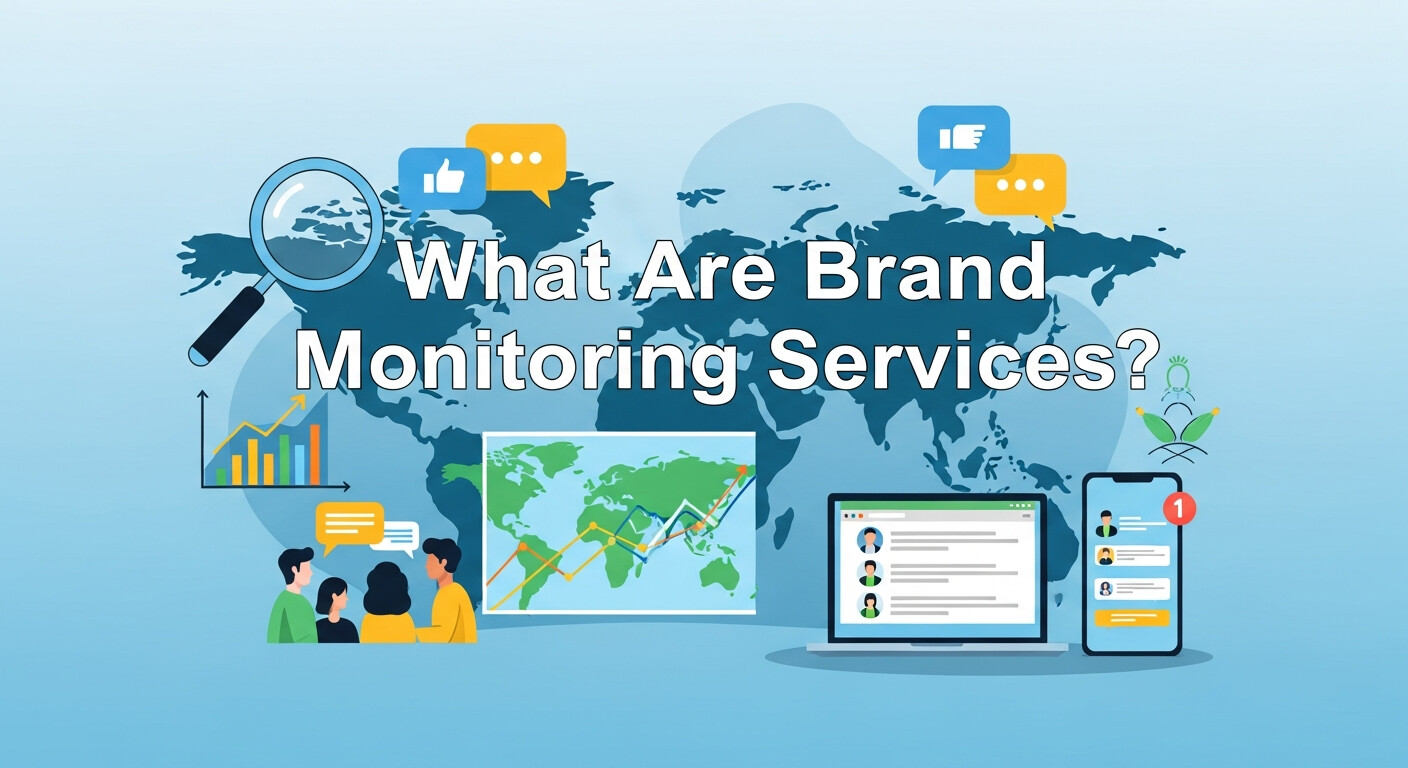
Brand monitoring services focus on the micro-level details. The primary goal here is to find every instance where your brand is mentioned, regardless of the platform. This isn’t limited to social media; it encompasses news sites, blogs, forums (like Reddit), review sites (like Yelp or G2), and even print media in some cases.
The Reactive Approach
Brand monitoring is largely a reactive strategy. It is about customer service and immediate damage control. When a customer posts a negative review or asks a support question on a public forum, monitoring tools alert you so you can respond immediately.
Key Metrics in Monitoring
When you employ brand monitoring services, you are typically looking at:
- Direct Mentions: Someone tagging your official handle.
- Untagged Mentions: Someone typing your brand name without the “@” symbol.
- Misspellings: Catching variations of your brand name (e.g., “SanMo” vs. “San Mo”).
- Share of Voice: How often you are mentioned compared to competitors.
Why It Matters for Reputation Management
Effective reputation management relies heavily on monitoring. You cannot fix a problem you don’t know exists. If a PR crisis starts brewing on a niche blog, brand monitoring is the early warning system that allows you to address the issue before it goes viral. It allows your support team to surprise and delight customers who praise you, and de-escalate customers who criticize you.
What Is Social Listening?
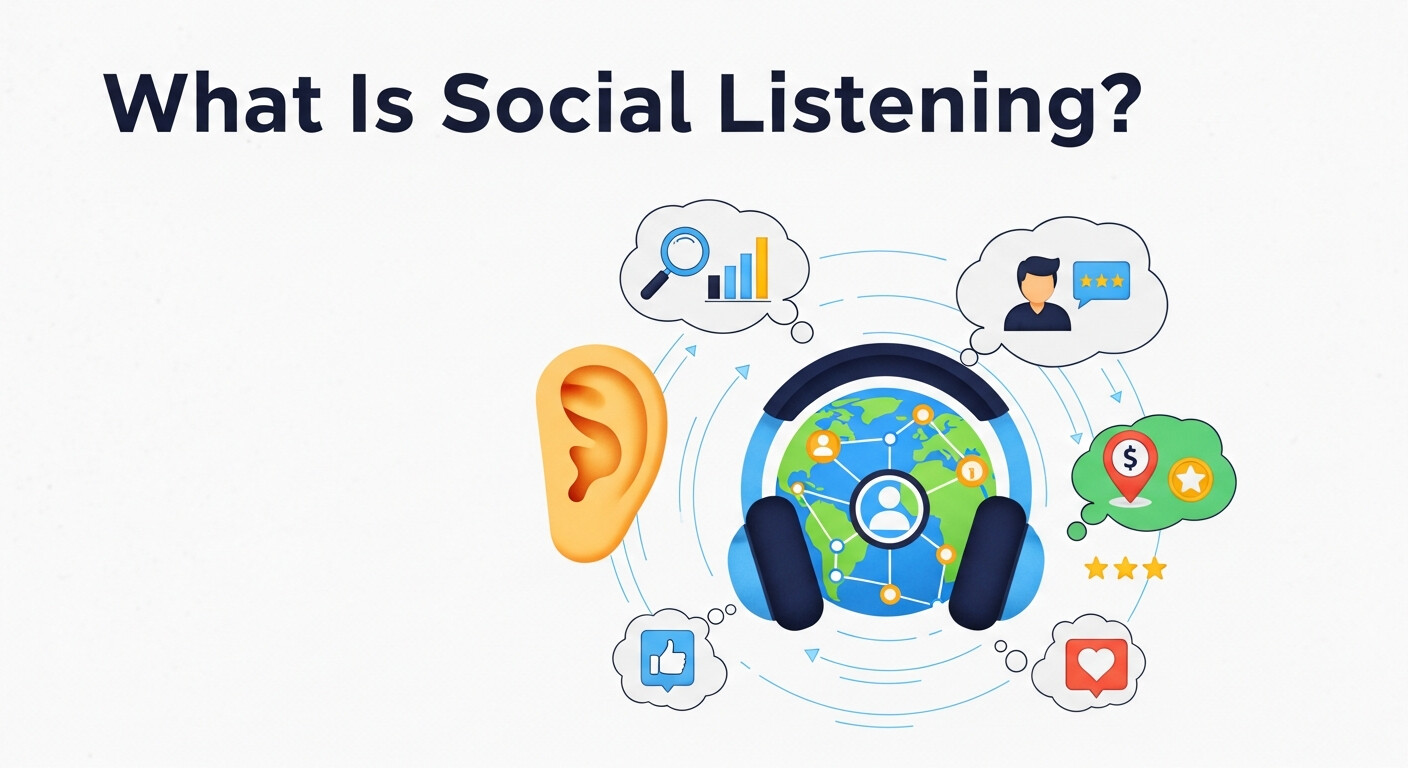
If monitoring is the microscope, social listening is the telescope. It looks at the bigger picture. Social listening aggregates data from brand monitoring but takes it a step further by analyzing that data for patterns, trends, and actionable insights.
The Proactive Approach
Social listening is strategic. It doesn’t just look at your brand; it looks at your entire industry. You might track keywords related to your competitors, general industry pain points, or emerging cultural trends.
For example, a monitoring tool might tell you that 50 people complained about your software’s loading speed today. A social listening strategy would analyze those complaints alongside industry data to reveal that “loading speed” has become the number one priority for users in your sector this quarter, and that your main competitor just released a patch addressing it.
Key Metrics in Listening
Social listening moves beyond simple counts and looks at:
- Sentiment Analysis: Is the conversation positive, negative, or neutral?
- Trend Identification: What hashtags or topics are frequently associated with your industry?
- Audience Demographics: Who is doing the talking? Where are they located?
- Share of Sentiment: Not just how much people are talking about you vs. competitors, but how positively they are speaking.
The Critical Differences: A Deep Dive
To choose the right tool or strategy, you must understand the functional differences between these two approaches.
1. Scope of Data
Brand monitoring services are often platform-agnostic but specific in scope. They scour the entire web but only look for exact matches of the keywords you provide (usually your brand name).
Social listening is usually restricted to social media channels (Facebook, X, Instagram, LinkedIn, TikTok) but is incredibly broad in scope. It looks for concepts, topics, and complex boolean queries rather than just names.
2. Time Orientation
Monitoring happens in the present. It is about what is happening right now. The value of monitoring degrades quickly; responding to a complaint three weeks late is often worse than not responding at all.
Listening looks at the past to predict the future. It analyzes historical data to identify seasonal trends or shifts in consumer behavior, allowing you to plan future marketing campaigns.
3. The Goal
The goal of monitoring is usually resolution. You find a post, you answer it, you solve the problem. It is a transactional process.
The goal of social listening is innovation. You find a pattern, you change your product roadmap, you adjust your messaging. It is a transformational process.
The Synergy: Why You Need Both
Choosing between monitoring and listening is a false dichotomy. For a comprehensive digital strategy, they must work in tandem.
The Coffee Shop Analogy
Imagine you own a coffee shop chain.
Using Brand Monitoring:
You get an alert that a customer tweeted: “My latte at the downtown location was cold.”
- Action: You apologize to the customer and offer a voucher.
- Result: You saved one customer relationship.
Using Social Listening:
You analyze data from the last six months. You notice a spike in negative sentiment regarding “temperature” and “cold coffee” specifically on Tuesday mornings across all your locations.
- Action: You investigate and realize the Tuesday morning supply delivery blocks the door, letting in cold air, or perhaps a specific shift manager isn’t calibrating the machines correctly. You change the delivery schedule.
- Result: You solve a systemic operational issue and improve customer satisfaction at scale.
Without monitoring, you would have missed the initial complaint. Without listening, you would have missed the pattern.
Common Mistakes Businesses Make with Brand Monitoring
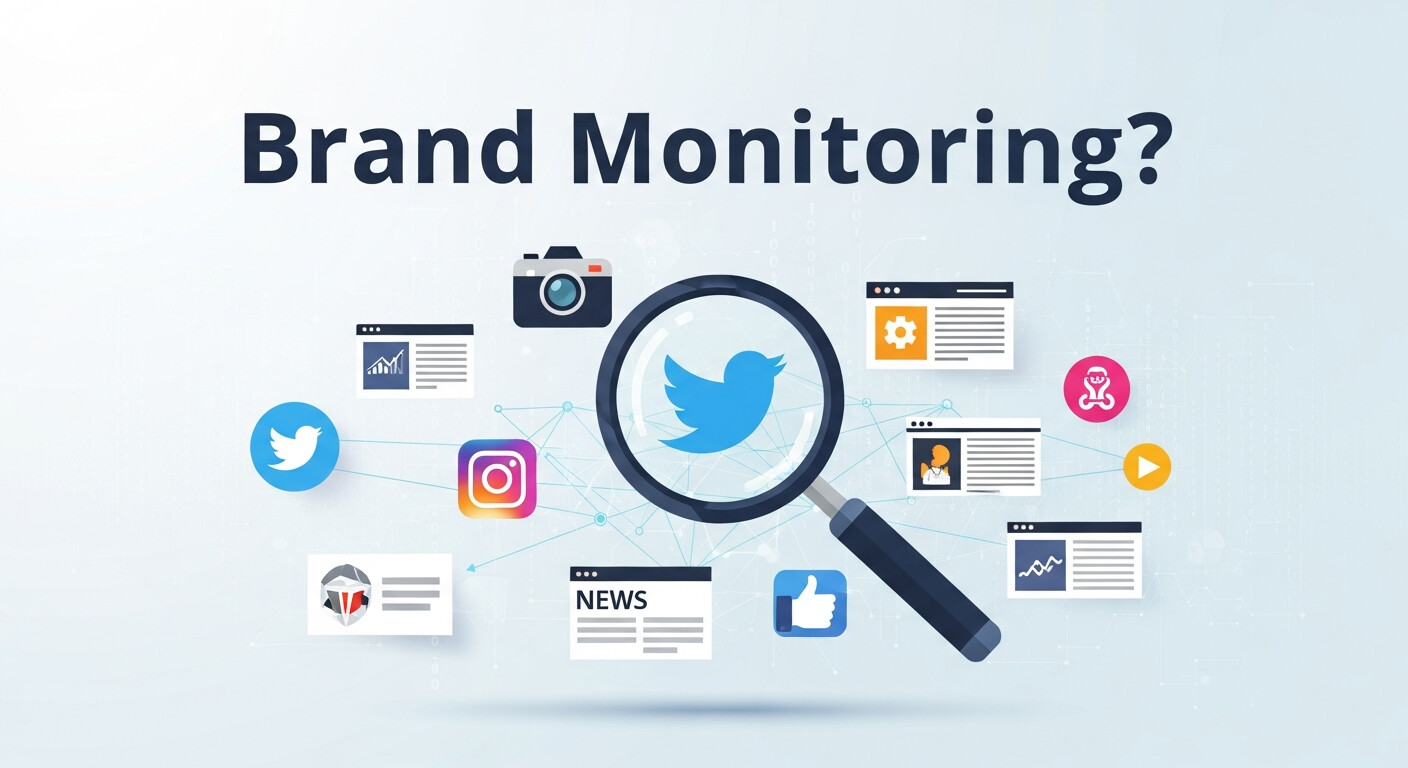
Many businesses invest in brand monitoring services but fail to extract real value because of common strategic mistakes. One of the biggest errors is focusing only on tagged mentions and ignoring untagged conversations, where most honest feedback actually lives. Another mistake is treating monitoring as a one-time setup instead of an ongoing process that needs refinement as the brand grows. Some companies also monitor data but fail to act on it, turning insights into unused reports rather than decisions. Lastly, relying on a single platform can create blind spots, especially when conversations shift to forums, review sites, or emerging social networks. Avoiding these mistakes ensures brand monitoring becomes a business advantage rather than just another dashboard to check.
How Brand Monitoring Services Support Customer Experience

Brand monitoring services play a critical role in shaping customer experience across digital touchpoints. Customers today expect fast, public responses when they voice concerns online. Monitoring tools allow businesses to detect questions, complaints, or praise in real time and respond before frustration escalates. This proactive responsiveness builds trust and signals that the brand genuinely listens. Beyond problem-solving, monitoring also helps identify recurring customer pain points, allowing companies to refine support processes and improve service quality. When customers see their feedback acknowledged and acted upon, loyalty increases. Over time, consistent engagement driven by brand monitoring transforms customer experience from reactive support into a relationship-building strategy.
The Role of AI and Automation in Modern Brand Monitoring
Modern brand monitoring services increasingly rely on AI and automation to handle the massive volume of online conversations. Manual tracking is no longer practical when brands are mentioned thousands of times across platforms every day. AI-powered tools can instantly detect sentiment, identify emerging issues, and filter irrelevant noise. Automation ensures alerts are delivered to the right teams at the right time, reducing response delays. Advanced systems can even predict potential reputation risks by spotting abnormal spikes in negative sentiment. As AI evolves, brand monitoring is shifting from simple mention tracking to intelligent insight generation, enabling businesses to act faster, smarter, and with greater confidence.
Choosing the Right Brand Monitoring Services for Your Business
Selecting the right brand monitoring services depends on your business size, goals, and industry. Small businesses may prioritize review tracking and social media mentions, while larger organizations need enterprise-level coverage across news, forums, and global markets. Key factors to evaluate include data sources, real-time alert accuracy, sentiment analysis quality, and reporting capabilities. Integration with customer support and marketing tools is also crucial to avoid data silos. A good monitoring service should scale with your business and adapt to changing online behavior. Choosing the right solution ensures your brand is not only protected but positioned to gain actionable insights from every conversation.
Enhancing Reputation Management with SanMo US
At SanMo US, we understand that data without context is just noise. Effective reputation management requires a blend of sharp-eyed monitoring and deep-dive listening.
Businesses often struggle because they try to perform these tasks manually or use disjointed tools that don’t talk to each other. This leads to data silos where the customer support team sees the complaints (monitoring), but the product team never sees the trends (listening).
SanMo US focuses on bridging this gap. By integrating brand monitoring services with high-level analytics, businesses can move from fighting fires to fireproofing their brand. Whether you are a local business trying to maintain a 5-star rating or a national enterprise tracking global sentiment, the key is integration.
Practical Use Cases
Crisis Management
- Monitoring: Alerts you the moment a negative news story breaks.
- Listening: Helps you gauge the public reaction to your apology statement to see if the sentiment is shifting.
Product Development
- Monitoring: Helps you find bugs reported by users on forums.
- Listening: Helps you identify feature gaps by analyzing what customers are asking for from your competitors.
Content Strategy
- Monitoring: Shows you which of your blog posts are getting shared.
- Listening: Shows you what topics your audience is currently obsessed with, helping you plan your editorial calendar.
Frequently Asked Questions (FAQ)
Can I use Google Alerts for brand monitoring?
Technically, yes, but it is limited. Google Alerts is a basic, free tool that tracks web mentions. However, it often misses social media conversations and lacks the analytics required for professional reputation management. For a business, dedicated brand monitoring services offer much higher reliability and coverage.
Is social listening expensive?
It can be. Enterprise-level listening tools require access to massive amounts of API data from social networks, which comes at a premium. However, the ROI comes from the strategic decisions you make. Avoiding a failed product launch because you “listened” to the market can save you significantly more than the cost of the tool.
Do I need social listening if I’m a small business?
Small businesses definitely need brand monitoring to handle reviews and questions. Social listening becomes necessary as you scale. If your volume of mentions is low, you might be able to identify patterns manually. Once you are handling hundreds of interactions a week, automated listening tools become essential.
How do I measure the success of these strategies?
For monitoring, success is measured by response time and resolution rate. For listening, success is measured by the successful implementation of insights—for example, a marketing campaign with higher engagement because it was based on trend data, or a product update that reduces negative sentiment.
Building a Resilient Brand Strategy
The digital landscape is unforgiving. A brand’s reputation can take years to build and minutes to crumble. Relying solely on intuition is no longer an option.
By distinguishing between the reactive nature of brand monitoring services and the proactive insights of social listening, you empower your business to do more than just survive online—you position it to thrive. You stop merely hearing the noise and start understanding the conversation.
Whether you are looking to protect your reputation, spy on competitors, or find your next big product idea, the answers are already out there. You just need the right approach to find them.