You might bake the flakiest croissants in the city or offer the most reliable plumbing service in the county. But if customers can’t find you when they pull out their phones and search for “bakery near me” or “plumber in [city name],” that quality doesn’t translate to revenue. Being the best kept secret in town is rarely a good business strategy.
This is the reality for millions of small and medium-sized businesses. The battle for customers is no longer fought just on billboards or in the yellow pages; it is fought on the search engine results page (SERP). specifically in the “Local Pack”—that map listing showing the top three businesses relevant to a user’s location.
Achieving visibility here isn’t luck. It is the result of a deliberate, technical, and ongoing strategy known as Local Search Engine Optimization (SEO). While many business owners attempt to handle this alone, the complexity of Google’s algorithm often requires a more sophisticated approach. This is where professional local SEO services come into play. A dedicated partner like SanMo US can navigate the technical hurdles to ensure your business isn’t just present online, but dominant.
This guide explores exactly how these services work, the specific tactics professionals use to move the needle, and why investing in expert help is often the most profitable marketing decision a local business can make.
Understanding the “Local Pack” Algorithm
To understand how professional services improve rankings, we first need to look at what Google values. Local search algorithms operate differently than standard organic search. While organic search prioritizes content depth and domain authority, local search hinges on three distinct pillars:
- Relevance: How well does a local business profile match what someone is searching for?
- Distance: How far is each potential search result from the location term used in a search?
- Prominence: How well-known is a business based on information Google has from across the web (links, articles, directories)?
A professional strategy addresses all three. You cannot change your physical distance (unless you open new locations), but you can significantly influence relevance and prominence. Local SEO services are designed to signal to search engines that your business is not only nearby but also the most trustworthy and relevant option for the user.
Optimizing the Google Business Profile (GBP)
The cornerstone of any local strategy is the Google Business Profile (formerly Google My Business). Many owners claim their profile, fill out the basic hours, and never touch it again. This is a missed opportunity.
Agencies take a granular approach to GBP optimization. This involves selecting the most accurate primary and secondary business categories, which is often the biggest factor in showing up for the right searches. If you are a “Pizza Restaurant” but also offer “Italian Delivery,” listing both correctly matters.
Professionals also manage the visual aspect of the profile. They ensure high-quality images of the interior, exterior, staff, and products are uploaded regularly. Google’s AI analyzes these photos to understand more about the business. Furthermore, experts utilize Google Posts to share updates, offers, and events directly on the search results page, keeping the profile active—a signal Google loves.
The Critical Importance of NAP Consistency
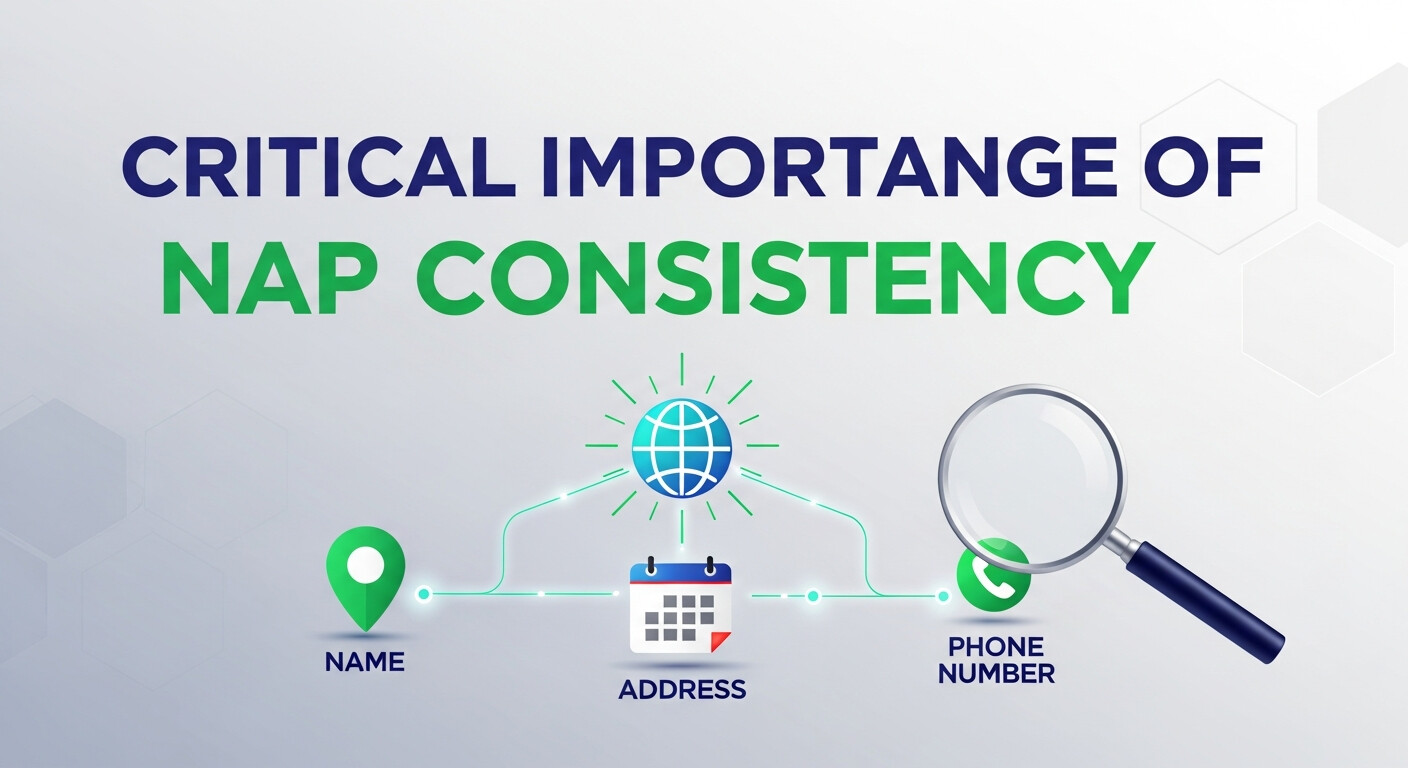
One of the most tedious yet vital aspects of local rankings is NAP consistency. NAP stands for Name, Address, and Phone number.
Search engines act like detectives. They scour the internet looking for information about your business to verify it exists and is legitimate. If your website lists your address as “123 Main St,” but your Facebook page says “123 Main Street, Suite B,” and an old directory listing has a disconnected phone number, the detective gets confused. This confusion breeds distrust, and Google does not rank businesses it doesn’t trust.
SanMo US and similar providers perform comprehensive audits of your digital footprint. They use specialized tools to crawl hundreds of directories (Yelp, Yellow Pages, TripAdvisor, Bing Places) to identify and rectify discrepancies. This “citation cleanup” ensures that every mention of your business across the web matches your GBP exactly, solidifying your digital authority.
Technical On-Page SEO for Local Visibility
While off-page factors like directories are important, your actual website requires specific tuning for local search. This goes beyond just putting your city name in the footer.
Location-Specific Landing Pages
For businesses serving multiple cities or areas, a single “Contact Us” page isn’t enough. Professional local SEO services develop dedicated location pages for each area you serve. These pages are optimized with unique content relevant to that specific community, localized keywords, and embedded maps. This helps you rank in towns where you provide service but don’t physically have an office.
Schema Markup Implementation
This is the “secret sauce” that often separates DIY efforts from professional results. Schema markup is a specific code added to your website’s HTML that helps search engines understand your content.
Local business schema tells Google explicitly: “This is our logo, this is our address, these are our operating hours, and this is our price range.” It removes the guesswork for the search engine. Implementing this code correctly requires technical expertise, but the payoff is often rich snippets in search results that attract more clicks.
Building Authority Through Local Link Building
In the world of general SEO, getting a link from a massive site like the New York Times is a huge win. In local SEO, however, relevance often trumps raw domain authority. A link from a local high school, a neighborhood church, or a city chamber of commerce can be incredibly powerful because it reinforces your connection to the specific geographic area.
Agencies focus on “unstructured citations” and local link building. They might help you sponsor a local charity run or get featured in a local digital newspaper. These links act as digital votes of confidence from the community, signaling to Google that you are an integral part of the local ecosystem.
Reputation Management and Reviews
You can have perfect technical SEO, but if your star rating is 2.5, you won’t get the click. Reviews are a ranking factor, but more importantly, they are a conversion factor.
Managing reviews is a core component of local SEO services. This involves two strategies:
- Review Generation: Implementing systems to ask satisfied customers for feedback via email or SMS automations. A steady stream of new reviews is better than a sudden influx of 50 reviews followed by silence.
- Review Response: Replying to reviews—both positive and negative—shows engagement. When you respond to a negative review professionally, you aren’t just talking to that one unhappy customer; you are performing for every future customer who reads that exchange.
Content Strategy with a Local Focus
Content is king, but context is queen. A generic blog post about “How to fix a leak” puts a plumber in competition with every other plumber in the world. A blog post about “Common plumbing issues in [City Name] historic homes” creates hyper-relevance.
Professional teams research what questions local customers are asking. They create content that addresses local regulations, weather patterns, news, or events. This establishes the business not just as an expert in their field, but as an expert in their location.
Why DIY Strategies Often Fail
Business owners wear many hats: accountant, manager, HR director, and salesperson. Adding “SEO Expert” to that list is rarely sustainable. The algorithms governing search are fluid; Google updates them thousands of times a year.
What worked in 2021 might be penalized in 2024. Professionals stay ahead of these changes. They monitor metrics that most business owners miss, such as:
- Direction Requests: How many people asked specifically for directions to your store?
- Click-to-Call: How many mobile searchers called you directly from the search page?
- Discovery vs. Direct Search: Are people finding you by name, or by searching for what you do?
Partnering with experts like SanMo US allows business owners to focus on operations while ensuring their digital storefront is working 24/7 to bring in new leads.
Turn Local Searches into Loyal Customers
The gap between page one and page two of Google is the difference between a thriving business and a stagnant one. Your customers are actively searching for your services right now, in your neighborhood. If your digital presence isn’t optimized to meet them, you are handing those leads to the competition.
Effective local visibility requires a blend of technical skill, creative content, and persistent reputation management. It is a complex ecosystem that demands professional attention. By investing in local SEO services, you aren’t just buying higher rankings; you are securing the future growth of your business in your community.
Don’t let your business remain hidden in plain sight. If you are ready to dominate your local market and turn search traffic into foot traffic, it is time to bring in the experts. Contact SanMo US today to discuss a strategy tailored to your city and your industry.
Frequently Asked Questions (FAQ) – Local SEO Services
1. What are local SEO services?
Local SEO services focus on improving a business’s visibility in location-based search results, especially for searches like “near me” or “[service] in [city].” These services optimize Google Business Profiles, local citations, on-page SEO, reviews, and local links to help businesses appear in the Local Pack and Google Maps results.
2. How is local SEO different from traditional SEO?
Traditional SEO targets national or global rankings, while local SEO prioritizes geographic relevance. Local SEO emphasizes proximity, local intent, Google Maps visibility, NAP consistency, and reviews, whereas traditional SEO focuses more on backlinks, content depth, and domain authority.
3. How long does it take to see results from local SEO?
Most businesses begin to see noticeable improvements within 2–4 months, with stronger, more stable results appearing around 4–6 months. Timelines depend on competition, current online presence, and how optimized the Google Business Profile and website are.
4. Why is Google Business Profile so important for local SEO?
Google Business Profile is the foundation of local SEO. It directly influences visibility in Google Maps and the Local Pack. Proper category selection, accurate information, regular updates, photos, posts, and reviews all signal relevance and trust to Google.
5. What is NAP consistency and why does it matter?
NAP stands for Name, Address, and Phone number. Consistency across all online directories builds trust with search engines. Inconsistent NAP data can confuse Google and negatively impact rankings, even if your website and content are strong.
6. Do reviews really affect local SEO rankings?
Yes. Reviews impact both rankings and conversions. Google considers review quantity, quality, recency, and responses. Businesses with higher ratings and active review management are more likely to appear in the Local Pack and earn customer trust.
7. Can I do local SEO myself, or should I hire professionals?
Basic local SEO can be done independently, but achieving consistent Local Pack rankings requires technical expertise, ongoing monitoring, citation management, schema markup, and algorithm awareness. Professional services save time, avoid costly mistakes, and usually deliver faster, more reliable results.
8. What types of businesses benefit most from local SEO?
Any business serving a specific geographic area benefits from local SEO, including restaurants, plumbers, dentists, lawyers, real estate agents, clinics, gyms, salons, and home service providers. If customers search for your service locally, local SEO is essential.
9. How do local backlinks help with rankings?
Local backlinks from community websites, local news, chambers of commerce, schools, or organizations reinforce geographic relevance. These links act as trust signals, showing Google that your business is an active and credible part of the local community.
10. Is local SEO a one-time setup or an ongoing process?
Local SEO is ongoing. Rankings fluctuate based on competition, algorithm updates, reviews, and business changes. Continuous optimization, content updates, citation monitoring, and reputation management are required to maintain and grow local visibility.