Link building has a reputation problem. For years, the practice was dominated by shortcuts—buying links, spamming directories, and gaming algorithms. Google caught on, penalties followed, and countless websites paid the price.
But here’s what those shortcuts missed: sustainable SEO was never about tricking search engines. It was always about earning trust. Ethical link building is the strategy that gets you there—not overnight, but in a way that compounds over time and doesn’t unravel with the next algorithm update.
This guide breaks down exactly what ethical link building looks like, why it matters for your long-term SEO performance, and the practical strategies you can start using today. Whether you’re new to SEO or looking to clean up a link profile that’s seen better days, you’ll find actionable insights here.
What Is Ethical Link Building?
Ethical link building—sometimes called “white hat” link building—refers to earning backlinks through legitimate, value-driven methods that comply with Google’s Webmaster Guidelines. The goal is to attract links because your content genuinely deserves them, not because you’ve found a loophole in the system.
At its core, ethical link building is grounded in one principle: create something worth linking to, then make sure the right people know it exists.
This stands in contrast to black hat tactics like:
- Purchasing links from link farms or private blog networks (PBNs)
- Using automated tools to generate mass backlinks
- Participating in link exchange schemes designed to manipulate PageRank
- Scraping and spinning content to create fake link bait
Google’s algorithms have grown sophisticated enough to detect most of these tactics. When they do, the consequences range from ranking drops to full manual penalties—damage that can take months (or years) to recover from.
Why Ethical Link Building Matters for Long-Term SEO
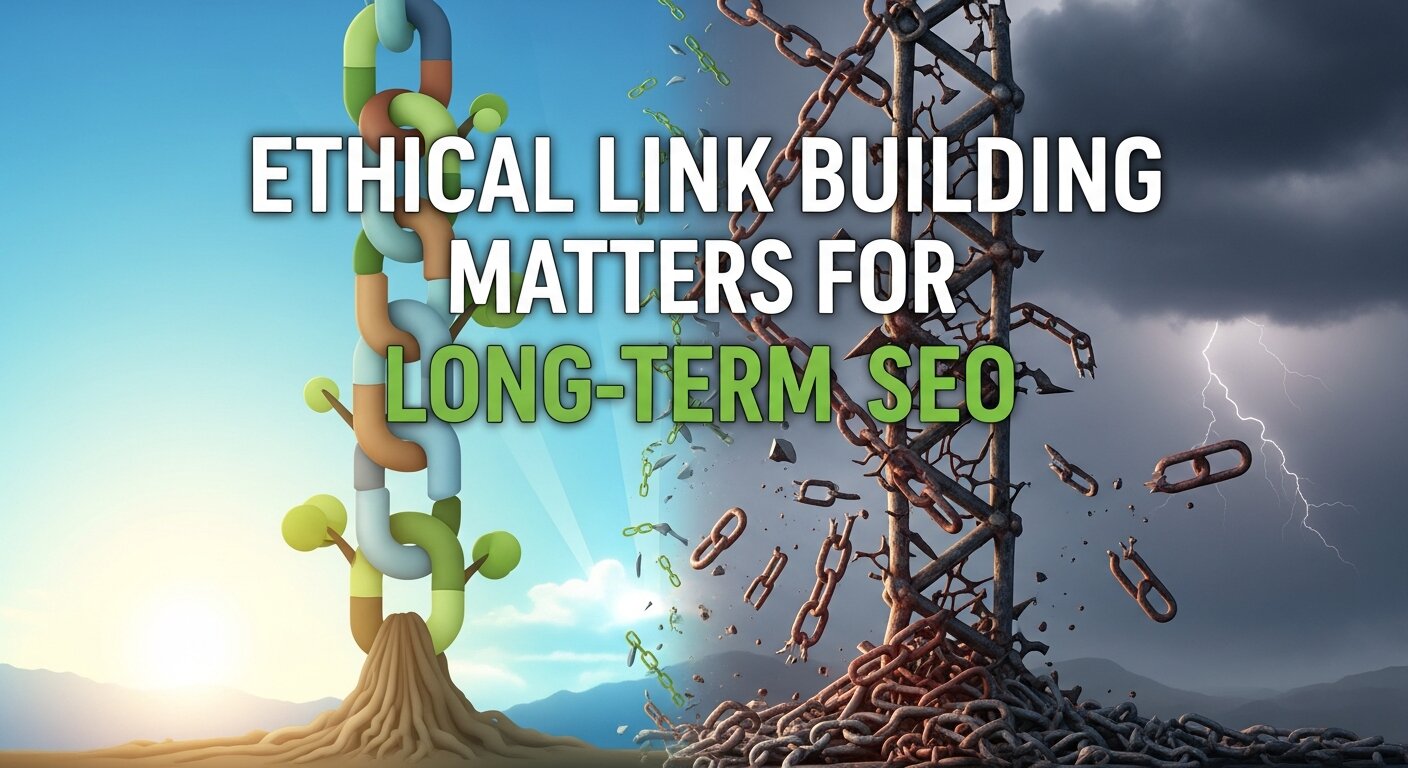 Backlinks remain one of Google’s top-ranking factors. A strong, diverse link profile signals to search engines that your site is authoritative, relevant, and trustworthy—qualities that translate directly into higher rankings.
The key word is “strong.” Not all links are created equal. A single backlink from a reputable, high-authority domain can carry more weight than hundreds of low-quality links. Ethical link building prioritizes quality over quantity, which means every link you earn contributes meaningfully to your site’s authority.
There’s also the resilience factor. Sites built on manipulative link profiles are perpetually vulnerable. One core update can wipe out years of rankings. Ethical link profiles, by contrast, tend to hold steady—and often improve—as Google refines its understanding of quality content.
For businesses like SanMo US, where long-term digital visibility is essential to growth, ethical link building is a foundational investment, not an optional extra.
6 Ethical Link Building Strategies That Work
1. Create Link-Worthy Content
This is the foundation of everything else. High-quality, original content naturally attracts backlinks because it gives other websites something worth referencing. Think about the resources you’ve bookmarked or shared in the past—chances are they offered something genuinely useful: a comprehensive guide, a fresh perspective, original research, or a tool that solved a real problem.
Content formats that consistently earn links include:
- Original research and data studies: Unique statistics get cited widely across industries
- Long-form guides and tutorials: Comprehensive resources become go-to references
- Infographics and visual assets: These are easy to embed and share
- Expert roundups and interviews: Contributors often share and link back to the content
The bar for “link-worthy” is higher than it’s ever been. Generic blog posts rarely attract organic backlinks. Specificity, depth, and originality are what set linkable assets apart.
2. Digital PR and Media Outreach
Digital PR bridges the gap between traditional public relations and SEO. The strategy involves crafting stories, data, or expert commentary that journalists and media outlets want to cover—earning high-authority backlinks in the process.
For example, a brand might commission a survey, analyze publicly available data to uncover a surprising trend, or position an executive as an industry expert available for comment. When a reporter covers the story and links back to the source, that’s an earned link from a credible, high-authority domain.
This approach requires investment upfront—research, outreach, and relationship-building—but the links earned tend to be among the most powerful available.
3. Guest Blogging (Done Right)
Guest blogging gets a bad reputation because it’s been abused so heavily. But contributing well-researched, genuinely useful articles to reputable publications in your industry remains a legitimate and effective link building strategy.
The distinction comes down to intent. If you’re writing to share real expertise with a relevant audience, guest blogging adds value to everyone involved. If you’re producing thin, keyword-stuffed content purely for the backlink, you’re likely violating Google’s guidelines—and savvy editors will spot it.
Prioritize publications your target audience actually reads. Relevance matters more than volume.
4. Broken Link Building
Broken link building is one of the most underutilised tactics in ethical SEO. The process works like this: you find a page on a reputable website that links to a resource that no longer exists (a 404 error), then reach out to the website owner to suggest your content as a replacement.
It’s a genuinely helpful outreach strategy—you’re alerting someone to a problem on their site and offering a solution. Tools like Ahrefs, Semrush, and Check My Links make it relatively straightforward to identify broken links at scale.
The success rate depends heavily on the quality of your replacement content and the relevance of your outreach. A tailored, specific email explaining exactly which link is broken and why your content is a good fit will always outperform a generic template.
5. Resource Page Link Building
Many websites maintain curated “resources” pages—lists of helpful links on a particular topic. These pages exist specifically to link out to valuable content, making them ideal targets for ethical outreach.
The strategy is straightforward: find resource pages relevant to your niche, identify where your content would genuinely add value, and reach out to the page owner with a brief, personalised pitch. It’s not always a high conversion rate, but the links you earn are typically clean, relevant, and editorially placed.
6. Building Relationships in Your Industry
Link building at its best is really just relationship building with an SEO benefit attached. When you invest time in connecting with bloggers, journalists, researchers, and thought leaders in your space, link opportunities emerge naturally over time.
This might look like co-authoring content, collaborating on research, participating in industry forums, or simply engaging genuinely with other creators’ work. These relationships create a network of trust—and trust is exactly what ethical link building is trying to signal to search engines in the first place.
How to Evaluate Link Quality
 Not every link is worth pursuing. Before investing time in outreach or content creation, it helps to understand what makes a backlink valuable.
Key factors to assess include:
- Domain Authority (DA) / Domain Rating (DR): Higher scores generally indicate a more authoritative site
- Relevance: A backlink from a site in your industry is more valuable than one from an unrelated niche
- Editorial placement: Links embedded naturally in content carry more weight than links in footers or sidebars
- Traffic: A link from a site with real, engaged visitors amplifies the SEO benefit
- Link profile of the linking site: Avoid sites with spammy or manipulative link profiles themselves
Tools like Ahrefs, Moz, and Semrush provide metrics to help you evaluate these factors quickly. The goal is to pursue links that a human editor would consider credible—because that’s increasingly what Google evaluates too.
Common Mistakes to Avoid
Even well-intentioned link building strategies can go wrong. Watch out for:
- Over-optimized anchor text: Using exact-match keywords in every anchor text looks unnatural and can trigger penalties. Vary your anchor text—branded terms, URLs, and generic phrases should all be part of the mix.
- Ignoring relevance: A backlink from a high-DA site in a completely unrelated industry provides limited value and can look suspicious.
- Prioritizing quantity: Ten thoughtfully earned links from relevant, authoritative domains will outperform 200 links from low-quality directories every time.
- Neglecting your existing link profile: Conduct regular audits to identify toxic or spammy backlinks and disavow them where necessary.
Frequently Asked Questions
1. What makes link building “ethical”?
Ethical link building means earning backlinks through methods that comply with Google’s guidelines—creating valuable content, building genuine relationships, and conducting outreach that offers real value to the receiving site. It avoids paid links, link schemes, or any tactic designed primarily to manipulate rankings.
2. How long does ethical link building take to show results?
Results vary depending on your industry, competition level, and the quality of links earned. Most campaigns begin to show measurable SEO improvements within 3–6 months, with more significant gains compounding over 12–18 months.
3. How many backlinks do I need to rank on Google?
There’s no magic number. What matters is the quality, relevance, and diversity of your link profile relative to competing pages. A thorough competitor backlink analysis—available through tools like Ahrefs or Semrush—will give you a clearer benchmark.
4. Is guest blogging still a valid link building strategy?
Yes, when done with genuine intent. Producing high-quality, relevant content for reputable publications in your industry remains a legitimate tactic. The key distinction is intent: writing to inform and engage an audience, rather than purely to secure a backlink.
5. Should I pay for links?
No. Paid links that pass PageRank violate Google’s guidelines. If discovered, they can result in ranking penalties that are costly and time-consuming to recover from.
6. What tools help with ethical link building?
Popular tools include Ahrefs, Semrush, Moz, BuzzSumo, and Hunter.io. Each supports different aspects of the process—from prospecting and analysis to outreach and tracking.
Build for the Long Game
 Ethical link building is a long-term play. It requires consistency, patience, and a genuine commitment to creating content that earns its place on the web—but the returns are durable in a way that shortcuts simply cannot replicate.
For SanMo US and any business serious about sustainable search visibility, the path forward is clear: focus on quality, invest in relationships, and build a link profile that reflects the real authority of your brand. Rankings built on a foundation of trust don’t crumble when the algorithm shifts—they strengthen.
Start by auditing your current link profile, identifying the gaps, and choosing one strategy from this guide to implement this month. Small, consistent steps in the right direction add up to meaningful results over time.