
You’ve published dozens—maybe hundreds—of blog posts. Some performed well at launch. Others never quite took off. And a few that once drove steady traffic have quietly faded into the second or third page of search results.
Here’s the thing: that existing content isn’t a liability. It’s an opportunity.
Advanced content optimization is the process of systematically improving your existing content to increase its relevance, authority, and visibility in search engines. Rather than starting from scratch, you work with what you already have—refining it, enriching it, and repositioning it to compete at the top of the search results page.
For many businesses, this approach delivers faster, more cost-effective results than producing new content alone. Search engines already have data on your existing pages. There’s a baseline of authority, indexing history, and in some cases, backlinks. Advanced content optimization builds on that foundation rather than abandoning it.
This post breaks down exactly how to do it—from identifying which content is worth optimizing, to the tactical changes that drive measurable ranking improvements.
Why Advanced Content Optimization Outperforms Publishing New Content Alone
Most content strategies are additive by default: write more, publish more, and hope the volume drives traffic. The problem with this approach is that it ignores the compounding value already sitting in your content archive.
Search engines reward freshness, relevance, and depth. A post that was accurate in 2021 may now be missing context, updated statistics, or recently popularized search terms. When that happens, competitors who have updated their content will outrank you—not because their post is fundamentally better, but because it’s more current.
Advanced content optimization closes that gap. By updating, expanding, and restructuring existing posts, you signal to search engines that your content is actively maintained, credible, and worth surfacing to users.
There’s also a compounding benefit. A well-optimized post that already ranks on page two can often be pushed to page one with targeted improvements—without the three-to-six-month wait that a brand-new post typically requires to gain traction.
How to Identify Which Content Is Worth Optimizing
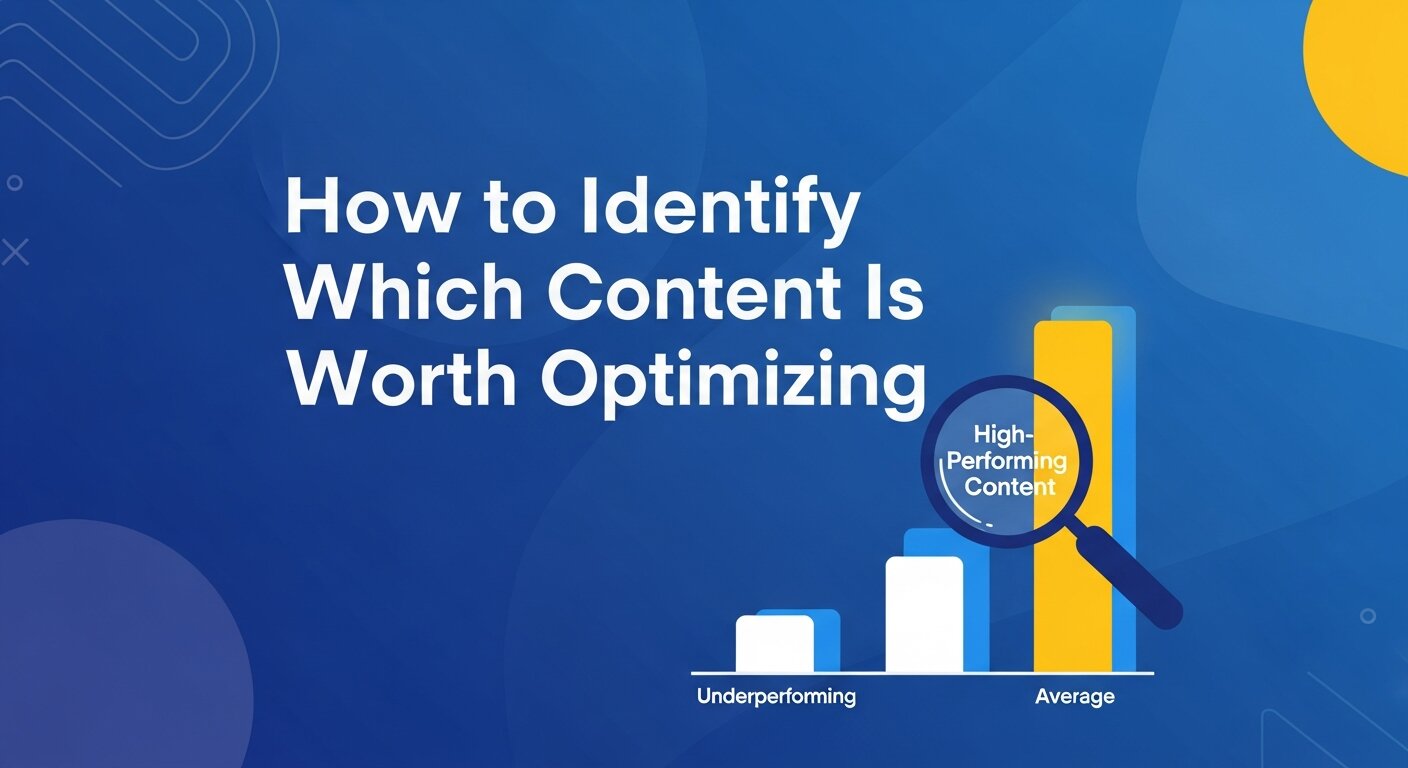 Not all content deserves equal investment. The goal is to identify pages with the highest return potential—those that have some existing authority or traffic, but aren’t yet performing at their ceiling.
Content That Ranks on Page Two or Three
Pages ranking in positions 11–30 are prime candidates for optimization. They’ve already earned some visibility, meaning Google sees them as relevant to the query. A targeted push—better on-page SEO, stronger internal linking, added depth—can move them into the top ten.
High-Impression, Low-Click-Through-Rate Pages
Google Search Console is your best tool here. Look for pages with significant impressions but a below-average click-through rate (CTR). This usually signals a mismatch between the meta title or description and what the searcher actually wants. Fixing that alone can drive meaningful traffic increases.
Outdated Posts on Evergreen Topics
If you have posts on topics that remain consistently relevant—SEO best practices, content marketing strategy, digital advertising—but those posts were written several years ago, they’re likely underperforming. Refreshing statistics, updating examples, and expanding coverage of subtopics can dramatically improve rankings.
Thin Content on Competitive Keywords
Some posts target valuable keywords but lack the depth needed to compete. If your 400-word post is up against comprehensive 2,000-word guides, no amount of promotion will help. Expanding that content with additional sections, examples, and structured data is the right move.
The Core Elements of Advanced Content Optimization
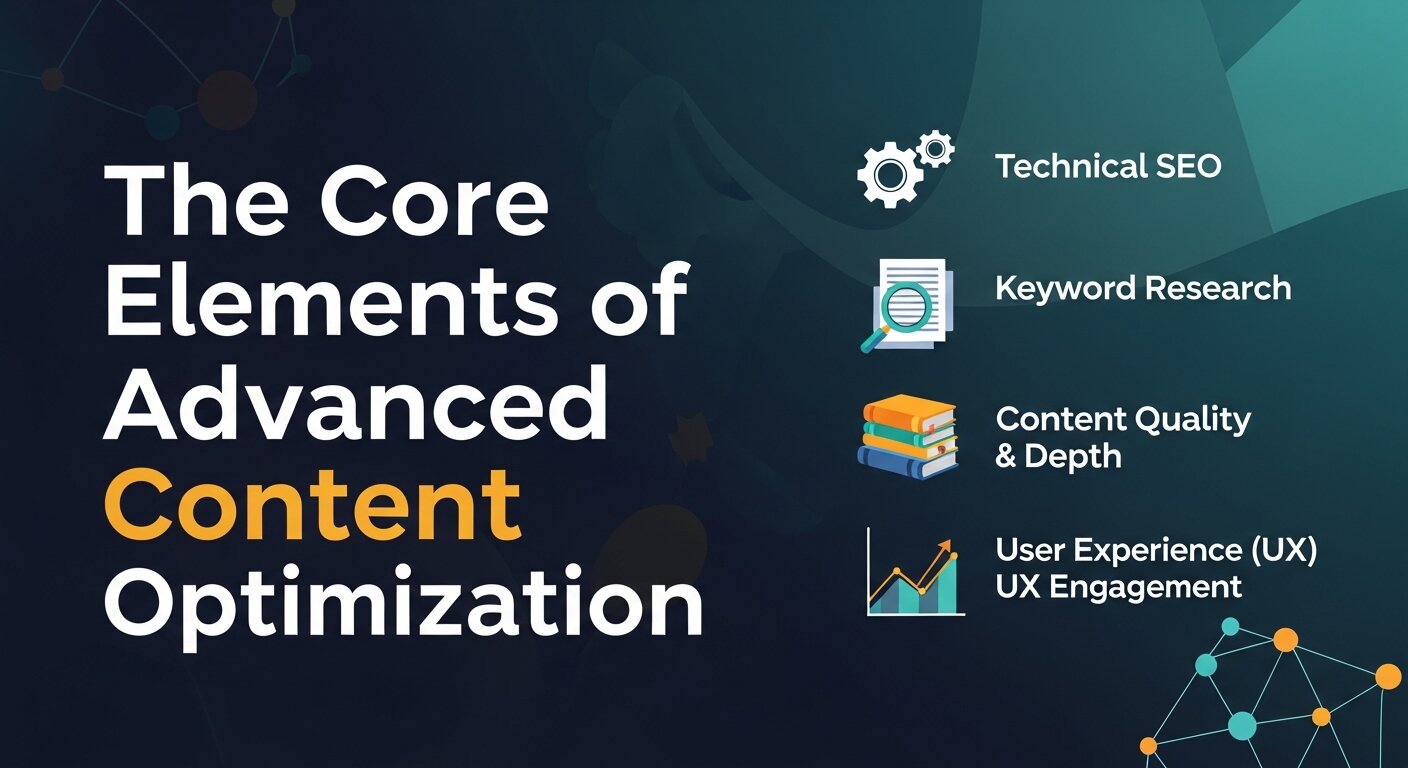 Once you’ve identified which content to prioritize, the work begins. Advanced content optimization goes well beyond fixing typos or updating a date in the headline. It involves a structured review of every element that influences how search engines and readers evaluate a page.
Conducting a Thorough Keyword Gap Analysis
Start by understanding how your target keywords have evolved since the post was first published. Use tools like Ahrefs, SEMrush, or Google Search Console to identify:
- New keyword variations your post isn’t currently targeting
- Related questions users are searching alongside the primary keyword
- Featured snippet opportunities where a direct, structured answer could earn you position zero
Integrate these additional terms naturally throughout the content—in subheadings, body copy, and FAQ sections. The goal isn’t keyword stuffing; it’s comprehensive coverage of a topic that matches how users actually search.
Restructuring Content for Search Intent
Search intent—the reason behind a query—is one of the most influential factors in ranking. If your content doesn’t match the intent of the searcher, it will struggle to rank regardless of its quality.
There are four primary intent types: informational, navigational, commercial, and transactional. Audit your content to confirm it aligns with the dominant intent for your target keyword. A post targeting a transactional keyword should lead clearly to a conversion action. A post targeting an informational keyword should educate, not sell.
Restructuring your headers, opening paragraphs, and calls to action around the correct intent can make a significant difference in both rankings and engagement metrics.
Improving E-E-A-T Signals
Google’s quality guidelines emphasize Experience, Expertise, Authoritativeness, and Trustworthiness—commonly referred to as E-E-A-T. For content to rank well in competitive spaces, it needs to demonstrate these qualities explicitly.
Practical ways to strengthen E-E-A-T include:
- Adding author bios with credentials or relevant experience
- Citing reputable sources and linking to primary data
- Including first-hand examples, case studies, or customer outcomes
- Updating content to reflect the most current information available
These aren’t just signals for search engines—they build reader trust, which improves time-on-page and reduces bounce rates.
Enhancing On-Page SEO Elements
Even technically strong content can underperform if basic on-page SEO elements aren’t optimized. Review the following for every post you’re optimizing:
- Title tag: Include the primary keyword near the front, keep it under 60 characters, and make it compelling enough to earn the click.
- Meta description: Write a clear, benefit-driven description under 155 characters that accurately reflects the content.
- Header structure: Use H2 and H3 tags logically, incorporating keyword variations where they fit naturally.
- Image alt text: Describe images accurately using relevant keywords.
- Internal links: Connect the updated post to related content on your site, and update older posts to link back to the optimized page.
Expanding Depth and Adding New Sections
Thin content rarely wins in competitive search landscapes. If your post is shorter or less detailed than the top-ranking results for your target keyword, expanding it is one of the highest-impact changes you can make.
Look at what the top three to five ranking pages cover that yours doesn’t. Common additions include:
- A step-by-step process breakdown
- A comparison table
- A FAQ section targeting long-tail question-based queries
- Real-world examples or brief case studies
- An updated statistics section
Adding structured sections—especially FAQ content using schema markup—also increases your chances of appearing in featured snippets and People Also Ask boxes.
Technical Factors That Support Content Optimization
Advanced content optimization doesn’t end with the words on the page. Technical performance directly impacts how search engines crawl, index, and rank your content.
Page Speed and Core Web Vitals
Google’s Core Web Vitals measure real-world page experience—loading speed, visual stability, and interactivity. A slow-loading page with high-quality content will still underperform against a faster competitor. Tools like Google PageSpeed Insights can identify specific bottlenecks.
Mobile Optimization
The majority of search queries now happen on mobile devices. If your content isn’t rendering cleanly on smaller screens—or if font sizes, button placements, or image scaling create friction—you’re losing both rankings and readers.
Canonical Tags and Duplicate Content
If multiple versions of a page exist (due to URL parameters, pagination, or content syndication), ensure canonical tags are correctly implemented. Duplicate content dilutes ranking signals and can confuse search engines about which version to index.
Measuring the Impact of Your Optimization Efforts
 Optimization without measurement is guesswork. Establish a clear baseline before making changes, then track performance over a defined period—typically 60 to 90 days.
Key metrics to monitor include:
- Organic traffic to the updated page (via Google Analytics or Search Console)
- Keyword rankings for primary and secondary target terms
- Click-through rate from search impressions
- Engagement metrics: time on page, scroll depth, and bounce rate
- Conversions: form fills, product clicks, or other goal completions tied to the page
If rankings improve but CTR remains flat, revisit your meta title and description. If traffic increases but conversions don’t, examine the alignment between your content and the call to action.
Leveraging Structured Data for Better Search Visibility
Structured data helps search engines understand your content more accurately, making it easier to qualify for rich results such as FAQs, review snippets, breadcrumbs, and How-To cards. While structured data is not a direct ranking factor, it can significantly improve visibility and click-through rates by enhancing how your pages appear in search results. During advanced content optimization, review your existing pages to determine whether schema markup can be added or improved. Implement relevant schema types based on the content format, validate them using Google’s Rich Results Test, and monitor Search Console for enhancements. Combined with high-quality content and strong on-page SEO, structured data provides additional context that increases your chances of earning more prominent search placements.
Building a Long-Term Content Refresh Strategy
 Successful content optimization is not a one-time project but an ongoing process that keeps your website competitive as search trends evolve. Create a content refresh schedule by grouping articles based on traffic, rankings, and business value. High-performing pages should receive regular updates to maintain their authority, while declining pages should be reviewed for outdated information, missing keywords, and shifting search intent. Track every optimization in a content calendar so you can measure performance improvements over time. A consistent refresh strategy helps preserve rankings, improve user experience, and maximize the return on your existing content investment without relying solely on publishing new articles.
Frequently Asked Questions About Advanced Content Optimization
What is advanced content optimization, and how does it differ from basic SEO?
Basic SEO typically covers fundamental on-page elements like meta tags, keyword placement, and page structure. Advanced content optimization goes further—analyzing search intent alignment, E-E-A-T signals, keyword gaps, content depth, user engagement metrics, and technical performance. The goal is to maximize a page’s ranking potential across all ranking factors, not just the most visible ones.
How often should you optimize existing content?
A quarterly content audit is a strong baseline for most businesses. However, posts in fast-moving industries—technology, finance, health—may need more frequent updates. Any post that shows a significant drop in traffic or ranking position should be reviewed immediately, regardless of the audit schedule.
How long does it take to see results from content optimization?
Results typically appear within 60 to 90 days of publishing updates, though this varies depending on the page’s existing authority, the competitiveness of the target keyword, and the extent of the changes made. Pages that already rank on page two or three often see improvements more quickly than pages starting from a lower baseline.
Does updating old content hurt existing rankings?
When done correctly, updating content improves rankings rather than hurting them. Avoid removing sections that are currently driving traffic unless you’re replacing them with stronger content. If you’re making substantial structural changes, monitor rankings closely in the weeks following publication.
What tools are most useful for advanced content optimization?
Google Search Console and Google Analytics are essential starting points for performance data. Ahrefs and SEMrush are widely used for keyword gap analysis and competitor benchmarking. Surfer SEO and Clearscope can help with content depth and semantic keyword coverage. Google PageSpeed Insights is useful for identifying technical performance issues.
Should you prioritize content optimization over creating new content?
The right balance depends on your current content volume and business goals. If you have a substantial library of existing content, optimizing high-potential pages often delivers faster ROI than publishing new posts. A hybrid approach—optimizing existing content while selectively publishing new content on high-value topics—tends to produce the best long-term results.
Build a Repeatable Content Optimization Process
The most effective SEO programs don’t treat content optimization as a one-time project. They build it into the editorial calendar as an ongoing practice.
A quarterly content audit—reviewing performance data, identifying decay, and prioritizing pages for optimization—ensures your content library stays competitive over time. Search behavior shifts. Competitors publish new content. Algorithms evolve. A regular cadence of optimization keeps your best-performing pages at the top, and your underperformers moving in the right direction.
At SanMo US, advanced content optimization is central to how we help businesses extract more value from their existing content investments. Rather than treating every piece of content as disposable, we approach each page as a long-term asset—one that can continue to generate traffic, leads, and authority with the right ongoing attention.