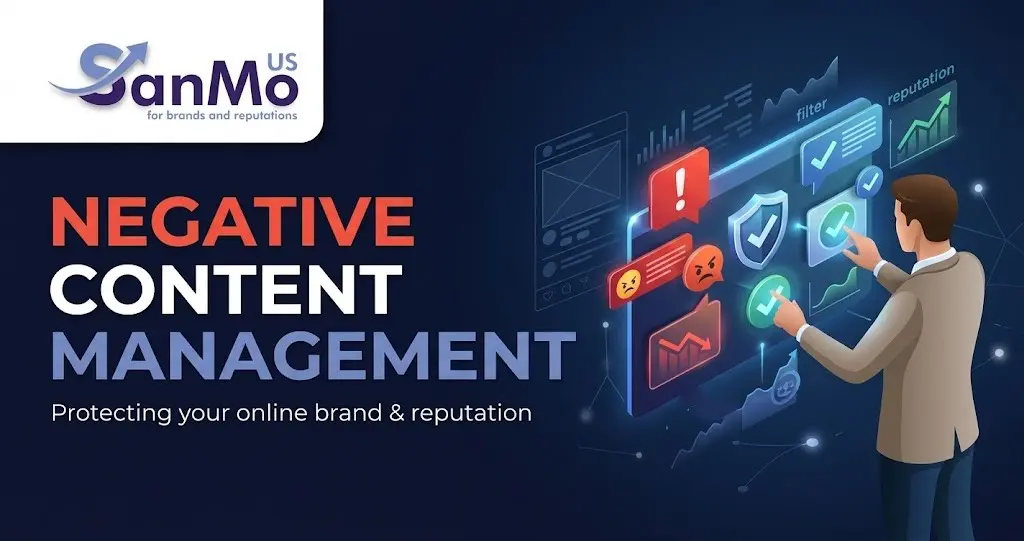
Negative Content Management is an essential strategy for businesses that want to protect their online reputation, maintain customer trust, and establish a positive digital presence. In today’s competitive online environment, negative reviews, misleading information, unfavorable news articles, and harmful search results can influence how potential customers perceive a company. Even a single negative result appearing prominently on Google can affect purchasing decisions, business relationships, and long-term brand credibility.
For businesses operating in the United States, managing negative online content requires a strategic approach that combines reputation monitoring, search engine optimization, content development, and professional reputation repair. Effective negative content management helps businesses address inaccurate information, respond to legitimate criticism, and improve the visibility of trustworthy content. SanMo US provides reputation management solutions designed to help businesses strengthen their online image, manage reputational challenges, and build lasting customer confidence.
What Is Negative Content Management?
Negative Content Management is the process of identifying, evaluating, addressing, and reducing the reputational impact of unfavorable information appearing online. It involves monitoring search engine results, reviewing negative customer feedback, addressing misleading claims, and improving the visibility of accurate and positive brand information. The primary objective is to protect credibility while maintaining a transparent and trustworthy digital presence.
Negative content can appear across search engines, review platforms, social media networks, blogs, forums, and news websites. Some content may represent genuine customer experiences, while other material may contain outdated details, factual inaccuracies, or misleading statements. Each situation requires an appropriate response based on the content’s nature, source, and potential business impact.
Professional online reputation management focuses on understanding these differences before taking action. Instead of attempting to remove every unfavorable mention, businesses can prioritize legitimate removal requests, responsible responses, reputation repair, and search result suppression where appropriate.
Common Types of Negative Online Content
Negative online content can take several forms, including unfavorable customer reviews, critical blog posts, negative news coverage, outdated business information, misleading online discussions, and inaccurate search results. Each type can influence customer perception differently depending on its visibility, credibility, and relevance to the audience.
Negative reviews may discourage prospective customers from purchasing products or services. Unfavorable news articles can affect public perception, while misleading information may create confusion about a company’s operations or professional credibility. Identifying the source and context of negative content helps businesses determine the most effective response.
Why Online Reputation Matters for Businesses
 Online reputation plays a significant role in how customers evaluate businesses before making purchasing decisions. Potential customers frequently research company names, compare reviews, and examine search results before contacting a service provider. A strong digital reputation can increase confidence, while prominent negative content may create hesitation and reduce conversion opportunities.
For businesses in the United States, reputation management is particularly important in competitive industries where customers have many alternatives. A company with accurate business information, positive customer feedback, and useful online content may establish greater credibility than a competitor whose search results contain unresolved reputational concerns.
How Negative Content Influences Customer Trust
Customer trust depends on the information people discover when researching a business. Repeated negative reviews, unresolved complaints, or misleading claims can raise questions about service quality, reliability, and professionalism. Even when a company delivers excellent services, unfavorable search results may prevent potential customers from considering its offerings.
A proactive reputation management strategy helps businesses address customer concerns and communicate accurate information. Responding professionally to legitimate complaints demonstrates accountability, while publishing useful content helps customers understand the company’s expertise, values, and services. These efforts can gradually improve customer confidence and strengthen brand perception.
The Impact on Search Visibility and Conversions
Negative content can affect business performance when unfavorable pages rank prominently for branded search queries. Potential customers may encounter criticism before discovering the company’s official website, service information, or customer success stories. This situation can reduce website visits, inquiry submissions, and sales opportunities.
Search engine optimization can help improve the visibility of relevant, trustworthy pages, although results depend on competition, website authority, and search engine algorithms. By developing high-quality content and strengthening existing digital assets, businesses can create a more balanced search presence and make accurate information easier to discover.
How Negative Content Management Protects Your Online Reputation
Negative Content Management protects online reputation by helping businesses understand reputational risks, respond appropriately to harmful information, and improve their overall digital presence. A structured strategy combines content monitoring, review management, search engine optimization, and reputation repair to address different challenges without relying on unrealistic promises or manipulative practices.
Effective management begins with identifying which negative results matter most. Businesses can then determine whether specific content deserves a response, correction request, legal review, or search visibility strategy. SanMo US helps businesses explore reputation management solutions that support a more credible online image and a stronger foundation for long-term brand growth.
Monitoring Brand Mentions and Search Results
Online reputation monitoring allows businesses to discover what customers, publishers, and online communities are saying about their brands. Regularly reviewing branded search results, customer reviews, social media discussions, and relevant publications helps companies identify potential issues before they become more difficult to manage.
Monitoring also provides insight into recurring complaints, customer expectations, and public sentiment. Businesses can use this information to improve customer service, correct outdated information, and develop appropriate communication strategies. Consistent monitoring makes reputation protection an ongoing business practice rather than a response reserved for major problems.
Addressing Negative Reviews and Customer Complaints
Negative reviews require careful evaluation because they may highlight genuine customer experiences or misunderstandings that deserve clarification. Ignoring reasonable complaints can make customers feel unheard, while aggressive responses may create additional reputational problems. Businesses should respond calmly, acknowledge legitimate concerns, and offer practical ways to resolve issues.
Review management also involves encouraging authentic customer feedback and maintaining accurate business profiles. Companies should never purchase fake reviews or pressure customers into posting misleading testimonials. Transparent review practices support stronger customer relationships and help prospective buyers make informed decisions.
Improving Search Results Through SEO
Search engine optimization is an important component of online reputation repair. Businesses can strengthen their digital presence by publishing relevant articles, improving service pages, optimizing company profiles, and developing useful resources that answer customer questions. These activities help search engines understand the relevance and value of legitimate brand content.
Negative search result suppression focuses on improving the visibility of relevant, accurate pages so that unfavorable results may become less prominent over time. However, suppression is not guaranteed, and search engines retain control over rankings. Sustainable SEO practices prioritize content quality, relevance, technical performance, and genuine authority rather than attempting to manipulate search algorithms.
Effective Strategies for Managing Negative Online Content
 Managing negative online content requires a combination of investigation, communication, content improvement, and ongoing monitoring. No single technique works for every situation because the appropriate response depends on the content’s accuracy, source, legal status, and search visibility. A well-planned strategy helps businesses allocate resources effectively and address their most important reputational concerns.
Companies should establish clear procedures for identifying negative mentions, assessing potential risks, and deciding which actions are appropriate. Professional reputation management services can help organize these activities while supporting consistent communication and responsible digital marketing practices.
Requesting Removal of Inaccurate or Harmful Content
Content removal may be possible when material violates a website’s policies, contains qualifying privacy violations, infringes legal rights, or meets specific platform removal requirements. Businesses can contact publishers, website administrators, review platforms, or search engines to request an investigation when there is a valid basis for removal.
Every removal request should include relevant evidence and a clear explanation of the concern. Search engines and publishers evaluate requests according to their own policies and applicable laws, so approval cannot be guaranteed. When content involves potentially defamatory statements or serious legal issues, consulting a qualified attorney may help determine the appropriate course of action.
Creating Positive and Authoritative Content
Publishing valuable content helps businesses demonstrate expertise and provide accurate information about their services. Educational blog posts, detailed service pages, company announcements, expert commentary, and authentic customer stories can contribute to a stronger digital presence when they offer genuine value to readers.
Content marketing should focus on answering customer questions rather than simply generating pages to influence rankings. Consistent publishing, appropriate keyword targeting, internal linking, and clear website structure can improve discoverability. Over time, a stronger collection of useful digital assets may help businesses establish credibility and compete for relevant branded search queries.
Strengthening Brand Reputation Across Digital Platforms
A business’s online reputation extends beyond its website. Review platforms, professional directories, social media profiles, industry publications, and business listings can all influence how customers evaluate a company. Maintaining accurate information and consistent branding across these platforms helps reduce confusion and supports a more professional digital identity.
Businesses should regularly review their contact information, service descriptions, company details, and customer communication practices. Maintaining credible profiles and engaging constructively with customers can strengthen brand recognition while creating additional opportunities for people to discover reliable information about the business.
The Role of Professional Reputation Management Services
Professional reputation management services help businesses develop organized strategies for monitoring online mentions, evaluating negative search results, improving digital content, and responding to reputational challenges. Experienced providers can help identify priority issues, recommend suitable actions, and coordinate reputation-related activities across different online channels.
For companies without dedicated reputation management teams, professional support can reduce the complexity of managing multiple platforms. However, businesses should choose providers that explain their methods clearly, follow ethical SEO practices, and establish realistic expectations regarding timelines and outcomes.
How SanMo US Supports Online Reputation Protection
SanMo US offers reputation management solutions for businesses seeking to strengthen their online presence and address negative digital content. Its Negative Content Management service is relevant to companies that need support evaluating unfavorable search results, protecting brand credibility, and developing a more balanced digital reputation.
A suitable reputation management strategy may involve monitoring search results, improving relevant website content, strengthening authoritative brand pages, and evaluating whether specific content qualifies for a removal request. The appropriate combination depends on the individual circumstances and the nature of the reputational challenge.
Businesses considering professional assistance should discuss their objectives, current search visibility, priority concerns, and expected reporting requirements before selecting a service. Working with a provider that emphasizes transparency and sustainable methods can help businesses make better-informed decisions about long-term reputation protection.
Measuring the Success of Negative Content Management
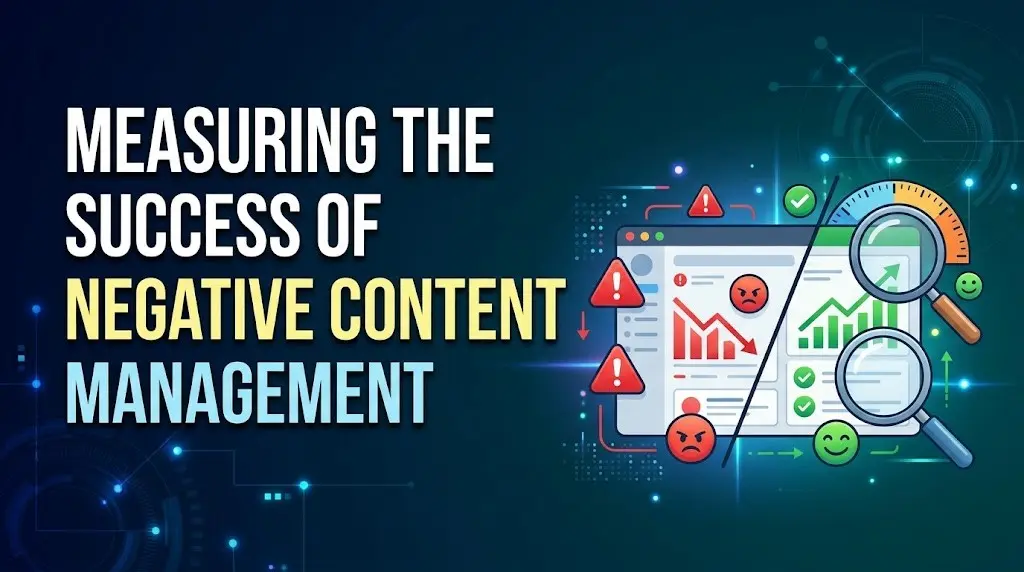 Measuring results is essential for understanding whether a reputation management strategy is making meaningful progress. Businesses should evaluate multiple indicators instead of relying exclusively on the removal of a particular search result or an immediate change in rankings.
Useful performance indicators include branded search visibility, the prominence of negative results, review sentiment, response rates, organic website traffic, customer inquiries, and engagement with important brand pages. Tracking these indicators over time helps businesses identify improvements and determine where additional work may be necessary.
Tracking Reputation and SEO Performance
Businesses can use search engine analytics, website analytics platforms, review monitoring tools, and regular manual searches to evaluate reputation performance. Google Search Console can provide information about search impressions, clicks, and queries, while website analytics can help measure organic traffic and relevant conversion activities.
Reviewing performance periodically helps businesses identify trends and adjust their strategies. Results should be interpreted in context because search algorithms, customer behavior, competitive activity, and external publications can influence performance. Consistent measurement supports more informed decisions and realistic expectations.
Best Practices for Long-Term Online Reputation Protection
 Long-term reputation protection depends on consistent monitoring, honest communication, and responsible content management. Businesses should treat their online reputation as an ongoing operational priority instead of waiting until negative information becomes highly visible. A proactive approach makes it easier to identify customer concerns, maintain accurate business information, and respond to emerging challenges.
Companies should also establish internal guidelines for handling complaints, publishing brand content, and communicating with customers. Employees responsible for marketing and customer service should understand how their actions can affect public perception. When reputation management becomes part of everyday business operations, organizations are better positioned to preserve trust and respond to unexpected challenges.
Building a Sustainable Reputation Management Strategy
A sustainable strategy combines regular monitoring, ethical review management, useful content creation, appropriate SEO improvements, and timely responses to legitimate concerns. Businesses should periodically reassess their priorities based on changes in search results, customer feedback, and industry conditions.
Working with a professional provider such as SanMo US may help businesses organize their reputation management activities and identify opportunities for improvement. The objective is not to eliminate all criticism but to ensure that accurate information, credible content, and responsible business practices are represented effectively across the digital landscape.
Conclusion
Negative Content Management plays an important role in protecting online reputation, maintaining customer confidence, and supporting long-term business growth. Negative reviews, misleading information, and unfavorable search results can influence purchasing decisions, but a structured response can help businesses address these challenges responsibly.
Through reputation monitoring, professional review responses, ethical content removal requests, search engine optimization, and authoritative content development, companies can improve their digital presence and strengthen brand credibility. Consistent measurement and proactive communication also help businesses identify emerging issues before they become more difficult to manage.
Frequently Asked Questions (FAQs)
1. What Is Negative Content Management?
Negative Content Management is the process of identifying, evaluating, and addressing unfavorable information that may damage a business’s online reputation. It can include review management, content removal requests, search engine optimization, reputation monitoring, and strategies for improving the visibility of accurate brand information.
2. Why Is Negative Content Management Important for Businesses?
Negative content can influence customer trust, purchasing decisions, brand credibility, and online visibility. Effective management helps businesses address legitimate concerns, correct inaccurate information where possible, and ensure that customers can discover relevant and trustworthy information about their products or services.
3. Can Negative Content Be Removed From Google?
Some content may qualify for removal from Google when it meets applicable policies or legal requirements. However, not every negative result can be removed. When removal is unavailable, businesses may explore appropriate correction requests, publisher outreach, and ethical SEO strategies to improve the visibility of relevant information.
4. How Does Negative Content Management Protect Online Reputation?
It helps businesses identify reputational risks, respond to negative reviews, address inaccurate information, and improve their search presence. Combining these activities with useful content and consistent customer communication can support stronger credibility and a more balanced online reputation.
5. What Is Negative Search Result Suppression?
Negative search result suppression is an SEO-focused approach intended to improve the visibility of relevant, trustworthy pages so that unfavorable results may appear less prominently. It does not guarantee removal or specific rankings, and its effectiveness depends on factors such as competition, relevance, and website authority.
6. How Long Does Negative Content Management Take?
The timeline depends on the content source, the complexity of the issue, the competitiveness of search results, and the actions required. Some corrections may happen relatively quickly, while search visibility improvements can take months or longer. No responsible provider should guarantee a specific outcome for every case.
7. Can Negative Reviews Damage a Company’s Reputation?
Yes, negative reviews can influence customer perceptions, particularly when complaints are recent, prominent, or repeated. However, businesses can respond professionally, address genuine service problems, and encourage authentic customer feedback to demonstrate accountability and improve customer confidence over time.
8. How Does SEO Help With Negative Online Content?
SEO can help improve the discoverability of accurate, relevant, and useful brand content. Optimizing service pages, publishing informative articles, strengthening internal links, and improving technical website quality may help authoritative pages compete for relevant search queries, although ranking outcomes are never guaranteed.
9. What Should Businesses Look for in a Reputation Management Service?
Businesses should evaluate a provider’s experience, transparency, reporting process, ethical SEO practices, and ability to explain realistic outcomes. Clear communication, appropriate removal procedures, and a strategy tailored to the specific reputational issue are important considerations when selecting professional support.
10. How Can SanMo US Help With Negative Content Management?
SanMo US offers a Negative Content Management service for businesses seeking to address online reputation concerns. Businesses can explore its service to understand potential approaches to managing unfavorable content, improving digital visibility, and protecting brand credibility according to their individual needs.