Ranking on Google used to be simpler. You’d sprinkle a few keywords into your content, build some backlinks, and watch your pages climb the results. Those days are long gone.
Search engines have grown smarter. They now reward content that genuinely answers questions, satisfies user intent, and delivers real value. To compete, you need more than basic SEO tactics—you need advanced content optimization.
At SanMo US, we’ve seen firsthand how the right optimization strategies can transform a struggling website into a traffic magnet. This guide breaks down the techniques that separate top-performing content from the pages buried on page two and beyond. By the end, you’ll have a practical roadmap to improve your rankings, attract qualified visitors, and turn more of them into customers.
What Is Advanced Content Optimization?
Advanced content optimization is the process of refining your content to maximize its visibility, relevance, and value for both search engines and readers. It goes beyond stuffing keywords into a page.
Instead, it focuses on understanding what your audience truly wants, structuring content for easy reading, and signaling expertise to search engines. Think of it as a blend of art and science. The art lies in creating engaging, useful content. The science involves the data, structure, and technical signals that help search engines understand and rank your work.
When done well, advanced content optimization helps your pages rank higher, earn more clicks, and keep visitors engaged longer.
Why Basic SEO Is No Longer Enough
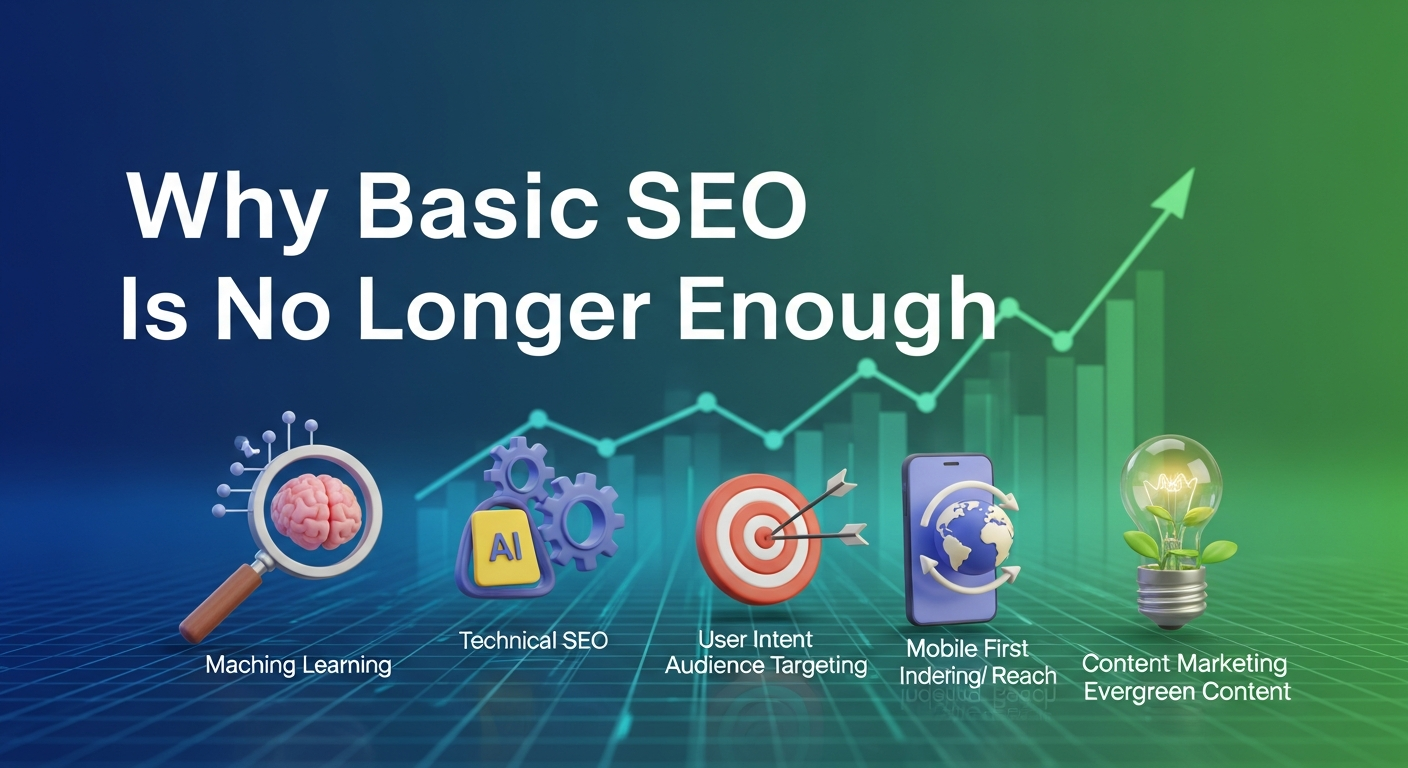 A decade ago, keyword density and meta tags could carry a page to the top. Today, Google’s algorithms evaluate hundreds of ranking factors, many of which relate to content quality and user experience.
Google’s helpful content system, for example, prioritizes content created for people rather than search engines. Pages that feel thin, generic, or written purely to rank tend to lose ground over time.
This shift means businesses must invest in deeper, more strategic content. The goal isn’t just to be found—it’s to be the best possible answer to a user’s query. Advanced content optimization helps you get there.
Master Search Intent
Every search query carries an intention behind it. Understanding that intent is the foundation of effective content optimization.
Search intent generally falls into four categories:
- Informational: The user wants to learn something (e.g., “how to bake sourdough bread”).
- Navigational: The user is looking for a specific website or page (e.g., “SanMo US login”).
- Commercial: The user is researching before a purchase (e.g., “best content optimization tools”).
- Transactional: The user is ready to buy or take action (e.g., “buy SEO software”).
To optimize for intent, study the pages already ranking for your target keyword. If the top results are all how-to guides, Google has signaled that searchers want instructional content. Publishing a product page instead would be swimming against the current.
Match your content format and depth to what users actually expect. This single practice can dramatically improve your rankings and reduce bounce rates.
Build Topic Clusters and Pillar Pages
Search engines reward websites that demonstrate authority on a subject. One of the most effective ways to build that authority is through topic clusters.
A topic cluster works like this: you create one comprehensive “pillar page” covering a broad topic, then write several related “cluster” articles that explore subtopics in detail. Each cluster page links back to the pillar, and the pillar links out to each cluster.
For example, a pillar page on “content marketing” might link to cluster articles on email newsletters, blog writing, video content, and social media strategy. This internal linking structure tells search engines you cover the topic thoroughly.
Topic clusters offer several benefits:
- They improve internal linking, which helps distribute page authority.
- They keep visitors on your site longer as they explore related content.
- They establish your brand as a trusted resource in your niche.
Start by identifying three to five core topics central to your business. Then map out the subtopics your audience cares about, and build content around each one.
Optimize for Semantic Search and Related Keywords
 Modern search engines understand language far better than they used to. Thanks to natural language processing, Google now recognizes synonyms, related concepts, and the context behind words.
This means you should no longer obsess over a single exact-match keyword. Instead, weave in semantically related terms that support your main topic. These are sometimes called LSI (latent semantic indexing) keywords, though the broader idea is simply about covering a topic comprehensively.
If your focus keyword is “advanced content optimization,” related terms might include “search intent,” “topic clusters,” “on-page SEO,” and “content strategy.” Including these natural signals depth and relevance.
To find related keywords, look at:
- Google’s “People also ask” boxes.
- Related searches at the bottom of the results page.
- Autocomplete suggestions in the search bar.
- Keyword research tools that group terms by topic.
Strengthen On-Page SEO Elements
Even the best content needs solid on-page optimization to perform. These elements help search engines understand your page and encourage users to click.
Craft Compelling Title Tags and Meta Descriptions
Your title tag is often the first thing users see in search results. Make it clear, specific, and enticing. Include your focus keyword near the beginning when it reads naturally.
Meta descriptions don’t directly affect rankings, but they influence click-through rates. Write descriptions that summarize the page and give users a reason to click.
Use Descriptive Headings and Structure
Break content into logical sections with clear H2 and H3 headings. This improves readability for users and helps search engines parse your content. Well-structured pages are also more likely to earn featured snippets.
Optimize Images and Media
Compress images so they load quickly. Add descriptive alt text that explains each image, which improves accessibility and gives search engines more context.
Improve Internal and External Linking
Link to other relevant pages on your site to guide users and spread authority. Where appropriate, link to credible external sources to back up your claims and add value.
Prioritize Content Quality and E-E-A-T
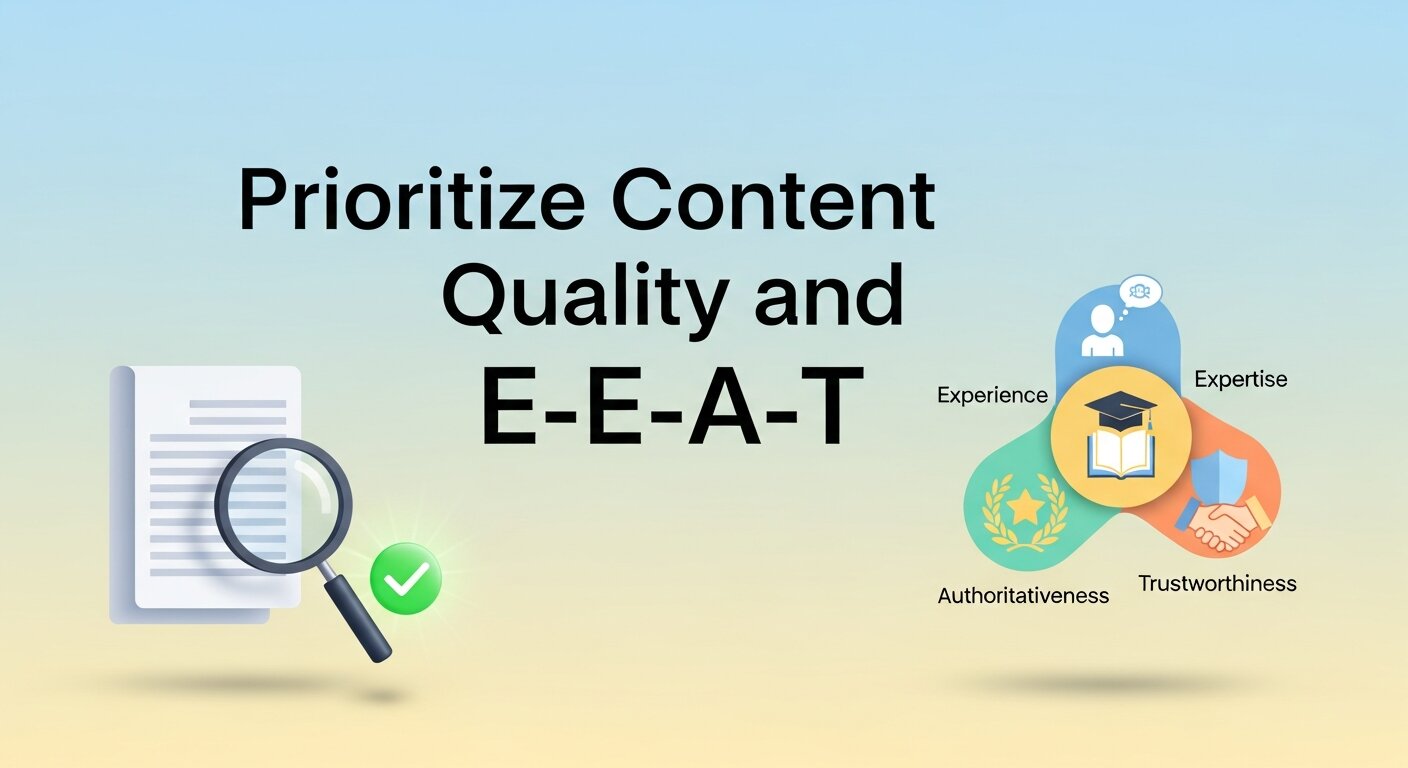 Google evaluates content through the lens of E-E-A-T: Experience, Expertise, Authoritativeness, and Trustworthiness. This framework matters especially for topics that affect health, finance, or safety.
To strengthen E-E-A-T in your content:
- Showcase real experience and firsthand knowledge.
- Cite credible sources and back up claims with data.
- Display author credentials where relevant.
- Keep content accurate and up to date.
High-quality content also tends to earn more backlinks naturally, which further boosts your authority. When you publish genuinely useful material, other websites are more likely to reference and link to it.
Refresh and Update Existing Content
Content optimization isn’t a one-time task. Search trends shift, information becomes outdated, and competitors publish fresh material. Regularly auditing and updating your existing content keeps it competitive.
Look for pages that have slipped in rankings or lost traffic. Update statistics, add new sections, improve readability, and refresh examples. Even small improvements can revive a page’s performance.
A good practice is to review your top-performing content every six to twelve months. This keeps your best assets accurate and relevant, protecting the rankings you’ve worked hard to earn.
Measure and Refine Your Strategy
You can’t improve what you don’t measure. Track key metrics to understand how your optimization efforts are paying off.
Important metrics to monitor include:
- Organic traffic: The number of visitors arriving from search engines.
- Keyword rankings: Where your pages appear for target terms.
- Bounce rate: The percentage of visitors who leave without engaging.
- Average time on page: How long visitors stay with your content.
- Conversion rate: How many visitors take a desired action.
Use tools like Google Analytics and Google Search Console to gather this data. Then refine your approach based on what’s working. Optimization is an ongoing cycle of testing, learning, and improving.
Leverage Structured Data for Better Visibility
Structured data, often called schema markup, helps search engines understand your content more effectively. While it may not directly improve rankings, it can enhance how your pages appear in search results through rich snippets, FAQs, ratings, and other visual elements. These enhanced listings often attract more clicks because they stand out from standard search results. For businesses, implementing structured data can increase visibility and improve user engagement without creating new content. Whether you’re publishing blog posts, service pages, products, or FAQs, schema markup provides additional context that search engines can use to present your information more accurately. As competition grows, structured data becomes an important component of a comprehensive content optimization strategy.
Focus on Content Readability and User Experience
Even the most informative content can underperform if visitors struggle to read it. Content readability plays a major role in keeping users engaged and encouraging them to explore your website further. Use short paragraphs, clear headings, bullet points, and simple language whenever possible. White space is equally important because it makes content easier to scan on both desktop and mobile devices. User experience signals such as time on page and engagement can indirectly influence search performance by demonstrating content value. Additionally, improving readability helps your message reach a wider audience. When visitors can quickly find answers and consume information effortlessly, they are more likely to trust your brand and return in the future.
Optimize Content for Voice Search
Voice search continues to grow as consumers rely on smartphones, smart speakers, and virtual assistants to find information quickly. Unlike traditional searches, voice queries are often conversational and phrased as complete questions. This shift requires businesses to optimize content using natural language and question-based keywords. Creating FAQ sections, answering common customer questions, and targeting long-tail phrases can improve your chances of appearing in voice search results. Additionally, concise and direct answers often perform better because digital assistants prefer content that clearly addresses user queries. By adapting your content strategy to changing search behaviors, you can capture additional traffic and remain competitive as voice-enabled technology becomes increasingly integrated into everyday life.
Use Data-Driven Insights to Guide Content Decisions
Successful content optimization relies on more than assumptions—it requires data. Analytics tools provide valuable insights into how visitors interact with your content, revealing opportunities for improvement. By analyzing metrics such as traffic sources, engagement rates, conversion paths, and keyword performance, you can identify which topics resonate most with your audience. Data also helps uncover content gaps, allowing you to create resources that address unmet user needs. Rather than producing content based solely on intuition, businesses can make informed decisions backed by measurable evidence. Over time, a data-driven approach leads to stronger content performance, more efficient resource allocation, and better overall results from your content marketing and SEO efforts.
Frequently Asked Questions
What is the difference between basic SEO and advanced content optimization?
Basic SEO focuses on fundamentals like keywords, meta tags, and backlinks. Advanced content optimization goes deeper, addressing search intent, topic authority, semantic relevance, content quality, and user experience to deliver better, more sustainable results.
How long does it take to see results from content optimization?
Most businesses begin to see measurable improvements within three to six months. The exact timeline depends on factors like competition, domain authority, and how aggressively you implement and maintain your optimization strategy.
How often should I update my existing content?
Review your top-performing and high-priority pages every six to twelve months. Update outdated statistics, refresh examples, and add new information to keep your content accurate, relevant, and competitive in search results.
Do keywords still matter for SEO?
Yes, keywords still matter, but their role has evolved. Rather than focusing on exact-match repetition, today’s best practice is to cover a topic comprehensively using your main keyword alongside semantically related terms and natural language.
What tools can help with content optimization?
Useful tools include Google Analytics and Google Search Console for performance tracking, keyword research platforms for finding related terms, and content optimization software that analyzes your page against top-ranking competitors.
Take Your Content to the Next Level
Advanced content optimization is no longer optional for businesses that want to compete in search. By mastering search intent, building topic clusters, strengthening on-page elements, and prioritizing genuine quality, you set your content up for lasting success.
Start small. Pick one strategy from this guide—perhaps auditing your existing content or mapping out a topic cluster—and put it into action this week. Over time, these efforts compound into stronger rankings, more traffic, and better results.
If you’re ready to elevate your SEO performance, the team at SanMo US can help you build and execute a content optimization strategy tailored to your goals. The sooner you start, the sooner you’ll see results.