Running a business means watching every dollar. And if you’re still relying on traditional payment methods—paper checks, wire transfers, or outdated point-of-sale systems—you’re likely paying more than you need to in transaction fees, processing delays, and administrative overhead.
Digital payment solutions have changed the economics of how money moves. For businesses of all sizes, the shift to digital isn’t just about convenience—it’s a direct lever for reducing costs. At SanMo US, we’ve seen firsthand how the right payment infrastructure can transform a company’s bottom line. This post breaks down exactly how digital payment solutions reduce transaction costs, which cost drivers matter most, and what to look for when choosing a platform that works for your business.
Why Traditional Payment Methods Are So Expensive
 Before exploring how digital payments help, it’s worth understanding what makes legacy systems so costly. Paper checks, for example, carry an average processing cost of $4 to $20 per transaction when you account for printing, postage, manual reconciliation, and labor. Wire transfers often come with flat fees ranging from $15 to $50 per transaction—sometimes more for international transfers. Cash handling introduces its own costs: counting, storage, transportation, and the risk of human error.
Beyond the direct fees, there’s the hidden cost of time. Manual payment processing requires staff hours for data entry, reconciliation, and dispute resolution. These inefficiencies compound quickly, especially for businesses handling high transaction volumes.
How Digital Payment Solutions Reduce Transaction Costs
Lower Per-Transaction Processing Fees
One of the most immediate benefits of digital payment solutions is a reduction in per-transaction fees. Digital platforms typically charge a flat percentage plus a small fixed fee per transaction—often significantly lower than the combined cost of manual processing.
When businesses consolidate payments through a single digital platform, they also gain negotiating power. Higher transaction volumes often qualify businesses for lower processing rates, something that’s nearly impossible to achieve with fragmented, traditional payment methods.
Elimination of Manual Processing Costs
Digital payment solutions automate what used to require significant human effort. Invoice generation, payment matching, reconciliation, and reporting can all be handled automatically. This reduces the need for dedicated accounts payable and receivable staff to perform repetitive tasks—freeing them up for higher-value work.
For businesses processing hundreds or thousands of transactions per month, this automation alone can eliminate tens of thousands of dollars in annual labor costs.
Fewer Payment Errors and Disputes
Manual payment processing is prone to error. A mistyped account number or an overlooked invoice can trigger a chain of costly corrections—chargebacks, dispute resolution fees, delayed cash flow, and strained vendor relationships.
Digital payment solutions reduce human error by automating data entry and validation. Built-in checks flag discrepancies before payments are processed, reducing the frequency and cost of errors. Fewer disputes mean less time spent on resolution and lower associated fees.
Faster Payment Cycles and Improved Cash Flow
Speed matters in business finance. The faster payments are processed, the sooner businesses can access their funds—reducing reliance on credit lines or short-term financing, which carry their own costs.
Digital payment solutions enable near-instant or same-day transfers in many cases, compared to the two to five business days typically required for check clearing or standard wire transfers. Improved cash flow means businesses can take advantage of early payment discounts from suppliers, further cutting costs.
Reduced International Transaction Costs
Cross-border payments are notoriously expensive. Traditional international transfers often involve multiple correspondent banks, each taking a cut, plus unfavorable foreign exchange rates and opaque fee structures.
Modern digital payment platforms have disrupted this model. By routing payments through more efficient networks and offering competitive exchange rates, these platforms can dramatically reduce the cost of international transactions—sometimes by as much as 50% compared to traditional bank transfers. For businesses with global supply chains or international customers, this is a meaningful saving.
Key Features to Look For in a Cost-Effective Digital Payment Solution
Not all digital payment platforms are built the same. Here’s what to prioritize when evaluating options for your business.
Transparent Fee Structures
Hidden fees are one of the biggest frustrations with payment processing. Look for platforms that offer clear, upfront pricing with no surprises—flat rates, volume discounts, and transparent foreign exchange markups.
Seamless Integration with Existing Systems
A digital payment solution that doesn’t connect with your accounting software, ERP, or e-commerce platform creates more work, not less. Integration is essential for realizing the full cost-reduction potential of digital payments. The best platforms offer API access and pre-built connectors for popular business tools.
Robust Fraud Detection and Security
Fraud is a significant cost driver. A platform with weak security puts your business at risk of chargebacks, stolen funds, and regulatory penalties. Look for solutions with multi-factor authentication, real-time fraud monitoring, and PCI-DSS compliance.
Scalability
Your payment solution should grow with your business. Platforms that charge linearly per transaction without offering volume discounts will eat into your savings as you scale. Choose a solution designed to handle increasing transaction volumes without a proportional increase in cost.
Reporting and Analytics
Detailed transaction data helps you understand your cost structure and identify further savings opportunities. Look for platforms that provide granular reporting on fees, processing times, and transaction categories.
The Role of SanMo US in Simplifying Digital Payments
 SanMo US helps businesses navigate the shift to digital payment solutions with a focus on reducing friction and cost across the payment lifecycle. By offering a unified platform that handles domestic and international transactions, SanMo US gives businesses the visibility and control they need to manage payment costs effectively.
The platform is designed with transparency in mind—no opaque fee structures, no hidden charges. Businesses working with SanMo US benefit from streamlined payment processing, automated reconciliation, and the kind of real-time reporting that makes cost management straightforward rather than a guessing game.
Whether you’re a growing mid-market company or an established enterprise looking to modernize your payment infrastructure, SanMo US provides the tools to make digital payments work harder for your bottom line.
Common Misconceptions About Switching to Digital Payments
“The upfront cost of switching is too high”
This concern is understandable but often overstated. Most modern digital payment platforms are cloud-based and require minimal upfront investment. Implementation timelines have shortened considerably, and the ongoing savings in processing fees and labor costs typically deliver a positive return on investment within months.
“Our industry doesn’t need digital payments”
No industry is immune to payment costs. Manufacturers, logistics companies, professional services firms, and retailers all process payments—and all stand to benefit from reducing the cost and complexity of those transactions.
“Digital payments are less secure”
The opposite is generally true. Digital payment platforms invest heavily in security infrastructure—encryption, tokenization, fraud detection algorithms, and compliance certifications—that most businesses could not replicate independently. The security risk of paper checks (susceptible to fraud and loss) often exceeds that of well-designed digital payment systems.
Measuring the Real Impact on Your Business
To understand what digital payment solutions can save your business, start by auditing your current payment costs. Add up:
- Monthly processing fees across all payment methods
- Staff time spent on payment-related tasks (expressed as an hourly cost)
- Costs associated with payment errors, disputes, and chargebacks
- Fees paid on international transfers and foreign exchange conversions
- Late payment penalties from delayed processing
Once you have a clear picture of your current cost structure, you can model the savings a digital payment solution would generate. Most businesses are surprised by how significant the total is—and how quickly the math favors making the switch.
How Digital Payment Solutions Improve Customer Experience
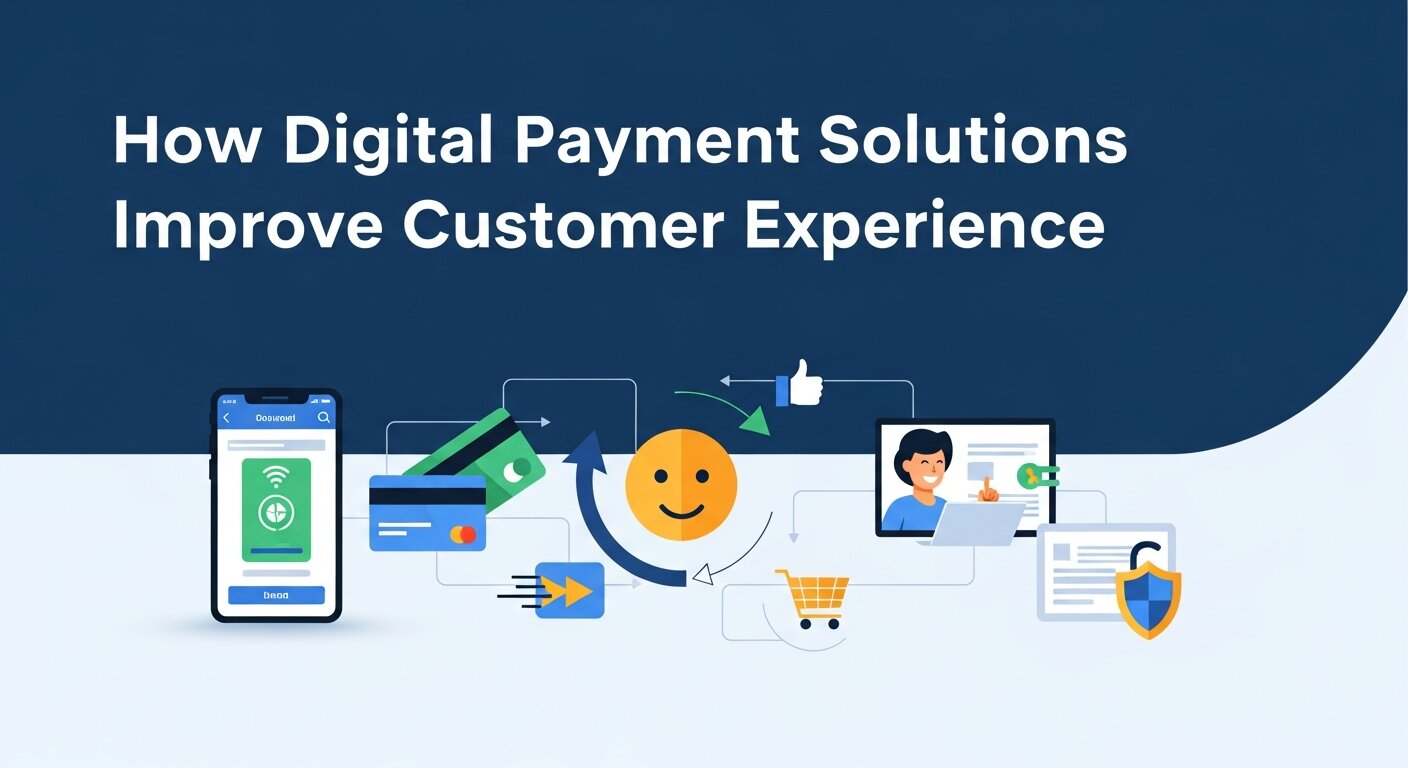 Customer expectations have changed dramatically in recent years. Buyers now expect fast, secure, and flexible payment options regardless of whether they shop online, in-store, or through mobile devices. Digital payment solutions make this possible by supporting multiple payment methods, reducing checkout friction, and enabling real-time payment confirmations. A smoother payment experience increases customer satisfaction while reducing cart abandonment in e-commerce environments. Businesses also benefit from quicker issue resolution through automated receipts and transaction tracking. By creating a seamless payment journey, companies build trust, encourage repeat purchases, and strengthen long-term customer relationships. Better customer experiences ultimately translate into higher revenue and lower operational costs.
Compliance and Regulatory Benefits of Digital Payment Solutions
Managing financial compliance can be both time-consuming and expensive for businesses. Modern digital payment solutions simplify this process by automatically maintaining transaction records, generating audit trails, and supporting compliance with industry regulations. Many platforms are designed to meet standards such as PCI DSS, anti-money laundering (AML), and Know Your Customer (KYC) requirements. Automated reporting reduces administrative workload while minimizing the risk of costly compliance errors or penalties. Businesses gain greater confidence during financial audits because payment data is centralized and easily accessible. With regulatory requirements becoming more complex each year, digital payment solutions help organizations stay compliant while reducing operational risks and administrative expenses.
Supporting Business Growth Through Scalable Payment Infrastructure
As businesses expand, payment processing demands become increasingly complex. Digital payment solutions provide scalable infrastructure that grows alongside the organization without requiring significant system overhauls. Whether handling seasonal sales spikes, expanding into international markets, or adding new sales channels, modern payment platforms can efficiently manage increasing transaction volumes. Cloud-based architectures ensure consistent performance while reducing infrastructure maintenance costs. Businesses also gain access to advanced features such as subscription billing, recurring payments, and multi-currency support as their needs evolve. This flexibility allows companies to focus on growth strategies rather than worrying about payment limitations or expensive technology upgrades.
Using Payment Analytics to Drive Smarter Financial Decisions
 Digital payment solutions generate valuable transaction data that helps businesses make informed financial decisions. Advanced analytics dashboards provide insights into payment trends, customer purchasing behavior, processing costs, and revenue performance. By analyzing this information, businesses can identify opportunities to reduce fees, optimize pricing strategies, and improve cash flow management. Real-time reporting also helps detect unusual transaction patterns that may indicate fraud or operational issues. These insights support more accurate financial forecasting and strategic planning. Instead of relying on manual spreadsheets or outdated reports, organizations can use data-driven intelligence to improve efficiency, increase profitability, and make better long-term business decisions.
Frequently Asked Questions
What are digital payment solutions?
Digital payment solutions are technology platforms that enable businesses and consumers to send and receive money electronically. These include payment gateways, mobile payment apps, bank transfer systems, and integrated payment processing platforms. They replace or supplement traditional methods like cash, checks, and wire transfers.
How much can businesses save by switching to digital payment solutions?
Savings vary depending on a business’s transaction volume, current payment methods, and the platform chosen. Businesses that replace paper check processing can save between $4 and $20 per transaction in direct costs alone. High-volume businesses that automate reconciliation and reduce dispute rates often report annual savings in the tens of thousands of dollars.
Are digital payment solutions safe for business use?
Yes. Reputable digital payment platforms use encryption, tokenization, multi-factor authentication, and real-time fraud monitoring to protect transactions. Most are also PCI-DSS compliant, meaning they meet the payment card industry’s strict security standards. In many cases, digital payments are more secure than paper-based alternatives.
How long does it take to implement a digital payment solution?
Implementation timelines vary by platform and business complexity. Cloud-based solutions can often be deployed within days to a few weeks. Larger enterprises with complex ERP integrations may require a longer implementation period, but most providers offer onboarding support to minimize disruption.
What types of businesses benefit most from digital payment solutions?
Any business that processes a meaningful volume of transactions stands to benefit. This includes e-commerce companies, B2B service providers, manufacturers, logistics firms, and retailers. Businesses with international supply chains or customers benefit particularly from the reduction in cross-border transaction fees.
What should I look for when choosing a digital payment solution?
Key factors include transparent fee structures, integration with existing business software, robust security features, scalability, and detailed reporting capabilities. A platform that grows with your business—and offers volume-based pricing—will deliver the best long-term value.
Take Control of Your Transaction Costs
Transaction costs are one of those expenses that businesses tolerate without questioning. They feel fixed, inevitable—just part of doing business. But they’re not.
Digital payment solutions give businesses a direct way to reduce what they spend on moving money. Lower processing fees, automated reconciliation, faster payment cycles, and reduced error rates all compound into meaningful savings over time. The technology is accessible, the implementation is manageable, and the financial case is clear.
If your business is ready to move beyond the hidden costs of traditional payment methods, SanMo US is built to help you get there. Explore how our digital payment solutions can be tailored to your business needs—and start capturing savings you didn’t know you were leaving on the table.