Choosing the wrong payment gateway can cost you more than just money. It can cost you customers. Studies show that 17% of shoppers abandon their cart due to security concerns, and another 9% leave because the checkout process is too complicated. The payment gateway you select directly shapes that experience—and your bottom line.
For business owners building or scaling an online store, the choices can feel overwhelming. Dozens of providers promise seamless integration, competitive fees, and rock-solid security. But not every solution fits every business. The right payment gateway depends on your sales volume, your target markets, your platform, and the experience you want to deliver to customers at checkout.
This guide breaks down everything you need to know to make a confident, informed decision—from understanding how payment gateways work to evaluating the features that matter most for your specific situation.
What Is a Payment Gateway Solution—and How Does It Work?
A payment gateway is the technology that authorizes and processes transactions between a customer’s bank and your business account. When a shopper enters their card details at checkout, the gateway encrypts that data, sends it to the payment processor, receives approval or denial, and relays the result back to your website—all within seconds.
Think of it as the digital equivalent of a point-of-sale terminal. Without it, accepting online payments simply isn’t possible.
There are three common types of payment gateway setups:
- Hosted gateways: The customer is redirected to a third-party payment page (e.g., PayPal). Simple to implement, but less control over branding.
- Self-hosted or integrated gateways: Payment is processed directly on your website. Offers a seamless experience but requires more technical setup and security compliance.
- API-based gateways: Highly customizable solutions built into your checkout flow using developer APIs. Ideal for businesses with unique needs and technical resources.
What Are the Key Factors to Consider When Choosing a Payment Gateway?
Transaction Fees and Pricing Structures
Cost is often the first thing businesses look at—and for good reason. Payment gateway pricing varies widely, and the wrong structure can eat into your margins fast.
Most providers charge a combination of:
- A per-transaction fee (typically 1.5%–3.5% + a flat fee per transaction)
- A monthly or annual subscription fee
- Additional charges for currency conversion, chargebacks, or refunds
For high-volume businesses, even a small difference in per-transaction rates adds up significantly. For lower-volume or newer businesses, a flat monthly fee may not be worth it. Map your expected transaction volume before committing to any plan.
Security and PCI Compliance
 Security isn’t optional. Every payment gateway solution must comply with the Payment Card Industry Data Security Standard (PCI DSS)—a set of requirements designed to protect cardholder data. Before selecting a provider, confirm that they are PCI DSS compliant and ask what tools they offer to help you maintain compliance on your end.
Look for gateways that include:
- SSL encryption to protect data in transit
- Tokenization, which replaces sensitive card data with a secure token
- 3D Secure authentication for an added layer of fraud prevention
- Fraud detection tools that flag suspicious transactions in real time
Supported Payment Methods and Currencies
Your customers don’t all pay the same way. Credit and debit cards remain dominant, but digital wallets like Apple Pay, Google Pay, and PayPal have surged in popularity. Buy Now Pay Later (BNPL) options are also becoming expected, particularly among younger shoppers.
If you sell internationally—or plan to—multi-currency support is non-negotiable. A gateway that only processes USD will limit your reach and frustrate international customers who prefer to pay in their local currency.
Integration With Your Existing Platform
Not all payment gateways play nicely with all platforms. If you’re running your store on Shopify, WooCommerce, Magento, or a custom-built site, you need to confirm that your chosen gateway integrates cleanly with your setup.
Poor integration leads to technical headaches, checkout errors, and lost sales. Prioritize gateways that offer:
- Native plugins for your ecommerce platform
- Thorough API documentation
- Dedicated developer support
Checkout Experience and Mobile Optimization
The checkout experience is where conversions are won or lost. A clunky, slow, or confusing payment flow drives customers away—especially on mobile devices, where more than 70% of ecommerce traffic now originates.
Look for gateways that offer:
- A streamlined, minimal-step checkout
- Fully responsive mobile design
- Guest checkout options (not just account-based payments)
- Fast page load times
Customer Support Quality
When a payment issue arises—and at some point, it will—you need responsive, knowledgeable support. Evaluate each provider’s support availability (24/7 vs. business hours), the channels they offer (live chat, phone, email), and the quality of their documentation and help center.
Reading third-party reviews on platforms like G2 or Trustpilot can give you a realistic picture of how providers handle issues in practice.
How Does SanMo US Simplify Payment Gateway Solutions for Businesses?
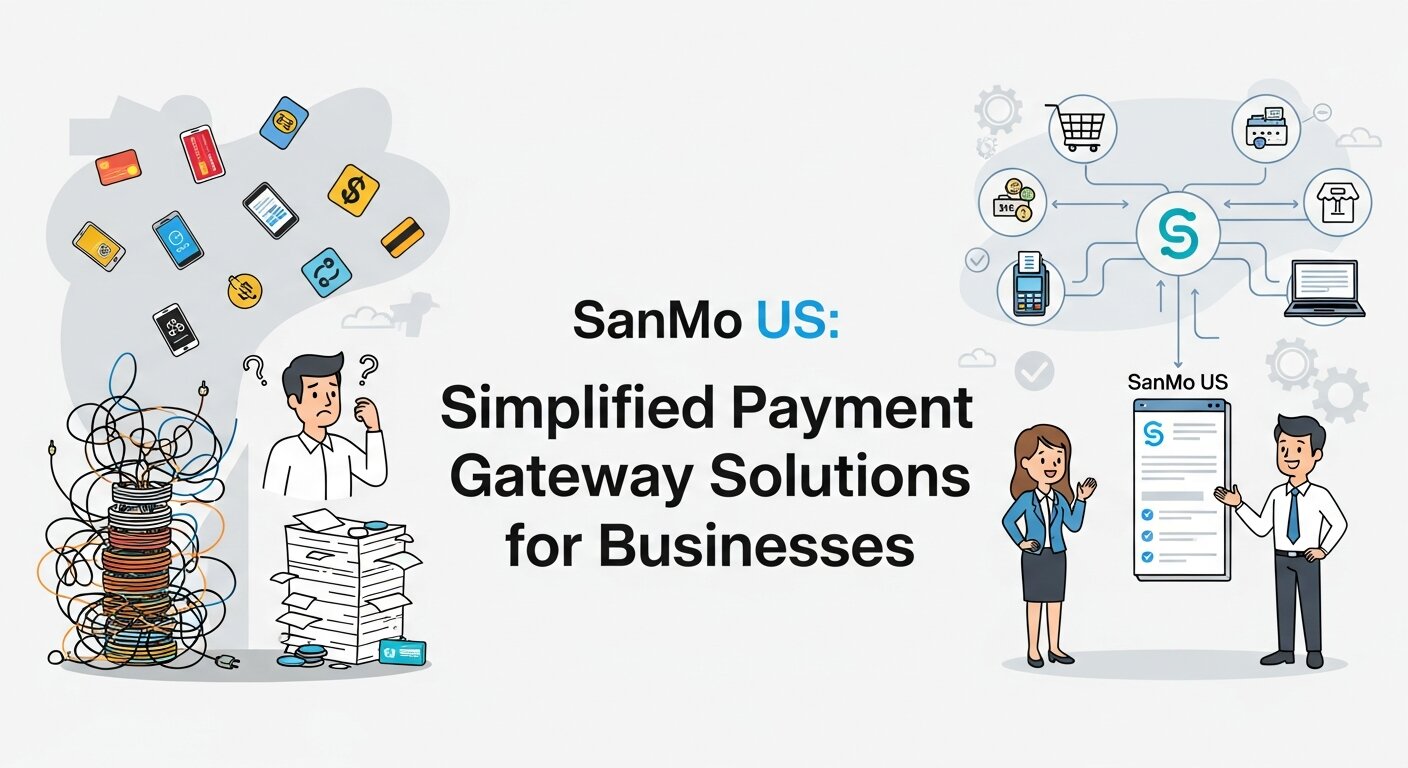 SanMo US offers payment gateway solutions designed to meet the needs of businesses across industries—whether you’re running a growing ecommerce store, a subscription-based service, or a high-volume retail operation.
SanMo US focuses on delivering secure, scalable payment processing with transparent pricing, multi-currency support, and seamless integration across major ecommerce platforms. Businesses that partner with SanMo US gain access to a robust fraud prevention infrastructure, PCI DSS-compliant technology, and a support team built around real merchant needs.
For businesses that want a payment gateway solution they can grow into—rather than one they’ll outgrow—SanMo US provides the flexibility and reliability to support that trajectory.
What Are the Most Common Mistakes Businesses Make When Choosing a Payment Gateway?
Focusing Only on Price
Competitive transaction fees matter, but they’re only one piece of the picture. A low-cost gateway that delivers a poor checkout experience, lacks fraud protection, or goes down during peak sales periods will cost far more in lost revenue than you’d ever save on fees.
Ignoring Chargeback Policies
Chargebacks—when a customer disputes a transaction and their bank reverses the charge—are an inevitable part of online selling. Each chargeback typically comes with a fee ($15–$100 depending on the provider), and too many can put your account at risk. Review how each gateway handles disputes and what tools they provide to help you fight invalid chargebacks.
Not Testing the Checkout Flow Before Launch
Always run end-to-end tests before your payment gateway goes live. This means placing test transactions, checking how the gateway handles declined cards, and verifying that confirmation emails and receipts fire correctly. Skipping this step is one of the most common—and costly—oversights in ecommerce launches.
Underestimating Scalability Needs
A gateway that works fine at 50 transactions a month may struggle at 5,000. As your business grows, you’ll need a solution that scales with you—handling increased volume, supporting new payment methods, and expanding into new markets without forcing a complete platform migration.
How to Evaluate and Compare Payment Gateway Solutions Step by Step
Narrowing down your options doesn’t have to be complicated. Follow this process:
- Define your requirements: List your platform, average monthly transaction volume, target markets, and must-have payment methods.
- Shortlist providers: Based on your requirements, identify three to five gateways that appear to meet your needs.
- Compare total cost of ownership: Factor in transaction fees, monthly fees, setup costs, and any additional charges.
- Assess security certifications: Confirm PCI DSS compliance and review available fraud tools.
- Test the integration: Use sandbox environments or free trials to test the checkout experience on your actual platform.
- Check reviews and support: Read real user reviews and test customer support responsiveness before committing.
- Negotiate terms: For higher-volume businesses, many providers will negotiate custom rates—don’t assume the listed price is fixed.
Secure Payment Processing for Customer Trust
 A reliable payment gateway does more than process transactions—it builds confidence at every stage of the customer journey. Modern payment gateway solutions use advanced encryption, tokenization, fraud monitoring, and PCI DSS compliance to protect sensitive financial information from cyber threats. Customers are more likely to complete purchases when they know their payment details are secure. Businesses also benefit from reduced fraud risks, fewer chargebacks, and improved brand credibility. By investing in a secure payment infrastructure, companies create a trustworthy shopping environment that encourages repeat purchases, strengthens customer relationships, and supports long-term business growth in today’s competitive digital marketplace.
Scalable Payment Gateway Solutions for Growing Businesses
As businesses expand, their payment processing needs become more complex. A scalable payment gateway solution ensures your business can handle increasing transaction volumes, multiple currencies, and diverse payment methods without sacrificing performance. Whether you’re entering international markets or launching new sales channels, the right gateway grows with your business. Features like API integrations, recurring billing, detailed analytics, and multi-platform compatibility help streamline operations while maintaining a seamless customer experience. Choosing a flexible payment solution today minimizes future migration challenges and allows your business to adapt quickly to changing customer expectations and evolving ecommerce trends.
Optimizing Checkout Experience to Increase Conversions
A smooth checkout process plays a critical role in converting visitors into paying customers. Payment gateway solutions that support fast page loading, mobile-friendly checkout, digital wallets, guest checkout, and one-click payments significantly reduce cart abandonment rates. Customers expect a simple, secure, and hassle-free payment experience regardless of the device they use. Businesses that optimize their checkout flow often see higher conversion rates, increased customer satisfaction, and improved revenue. By removing unnecessary steps and providing multiple trusted payment options, companies can create a frictionless purchasing experience that encourages customers to complete transactions and return for future purchases.
Frequently Asked Questions
What is a payment gateway solution?
A payment gateway is a technology service that securely authorizes and processes online transactions between a customer’s bank and a merchant’s account. It encrypts payment data, communicates with payment processors, and confirms whether a transaction is approved or declined.
How much does a payment gateway typically cost?
Most payment gateways charge a per-transaction fee (usually between 1.5% and 3.5% plus a small flat fee), along with optional monthly fees. Additional charges may apply for currency conversion, chargebacks, or premium features. Costs vary by provider and transaction volume.
What is PCI DSS compliance, and why does it matter?
PCI DSS (Payment Card Industry Data Security Standard) is a set of security requirements that any business accepting card payments must meet. Compliance helps protect customer payment data from breaches and is a legal requirement in many jurisdictions. Always confirm that your gateway provider is PCI DSS certified.
Can I use multiple payment gateways on the same website?
Yes. Some businesses use more than one gateway to offer customers flexible payment options or to serve different markets. However, managing multiple integrations adds technical complexity, so this approach is typically best suited to larger operations with dedicated development resources.
What payment methods should my gateway support?
At minimum, your gateway should support major credit and debit cards (Visa, Mastercard, American Express). Depending on your audience, you should also consider digital wallets (Apple Pay, Google Pay, PayPal), Buy Now Pay Later options, and local payment methods for international markets.
How do I know if a payment gateway is right for my business size?
Evaluate the gateway’s pricing structure relative to your transaction volume, its scalability features, and the level of support offered. Startups may prioritize ease of setup and low upfront costs, while established businesses may need advanced fraud tools, custom reporting, and dedicated account management.
Making the Right Call for Your Business
 No single payment gateway solution is right for every business. The best choice depends on the specific combination of your sales model, customer base, technical setup, and growth plans.
What’s universal is the standard you should hold any provider to: transparent pricing, proven security, flexible integration, and support you can actually rely on. Cut corners on any of these, and you risk undermining the trust you’ve worked hard to build with your customers.
SanMo US is built to help businesses navigate these decisions with clarity—offering payment gateway solutions that balance performance, security, and scalability in one place. If you’re ready to explore what the right gateway could mean for your business, SanMo US is a strong place to start.