The internet is a crowded place. Every minute, thousands of blog posts, videos, and social media updates flood the digital landscape. For businesses and marketers, this saturation presents a significant challenge: how do you ensure your voice is heard above the noise?
For years, the standard advice was simple: do keyword research, write decent copy, and build a few backlinks. While those fundamentals remain relevant, they are no longer sufficient to guarantee top-tier rankings or meaningful engagement. Search engines have evolved. They are smarter, more intuitive, and far more demanding. To stay competitive, your digital marketing strategy must evolve too.
This shift moves us from basic SEO into the realm of advanced content optimization. This isn’t just about pleasing an algorithm; it’s about crafting a digital experience that aligns perfectly with what your audience needs, exactly when they need it. It requires looking at content through a lens of technical precision, semantic relevance, and user psychology.
If you are ready to move beyond the basics and drive real, sustainable growth, you need to adopt a more sophisticated approach. This guide explores the high-level tactics that distinguish industry leaders from the rest of the pack, helping you transform your website into a high-performance asset.
Moving Beyond Keywords: The Era of Semantic Search
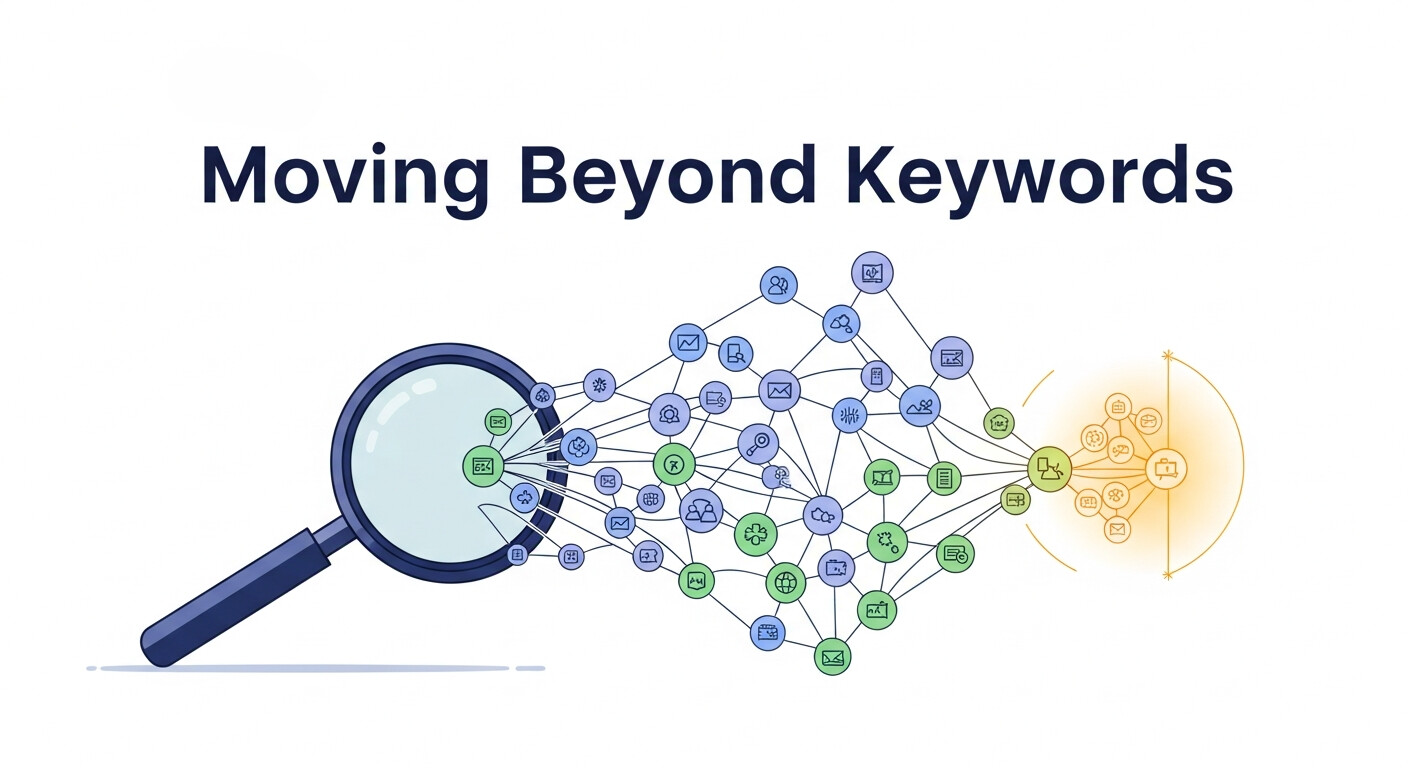
In the early days of SEO, you could rank for a phrase simply by repeating it enough times on a page. Those days are long gone. Today, search engines like Google use advanced algorithms—such as BERT and MUM—to understand the context, nuance, and relationship between words. This is known as semantic search.
Google doesn’t just look for strings of characters; it looks for meaning. To optimize for this, you must shift your focus from individual keywords to broader topics and entities.
Topic Clusters and Pillar Pages
One of the most effective ways to signal authority to a search engine is through the use of topic clusters. This strategy involves organizing your site architecture into “hubs” of content.
At the center is the Pillar Page. This is a comprehensive, long-form guide that broadly covers a core topic. For example, a digital marketing agency might have a pillar page on “Content Marketing.”
Surrounding this pillar are Cluster Content pages. These are shorter, more specific articles that address sub-topics related to the main theme. Using the previous example, cluster pages might cover “How to write a blog post,” “Video marketing trends,” or “Content distribution strategies.”
The magic happens in the linking. All cluster pages link back to the pillar page, and the pillar page links out to the clusters. This structure tells search engines that you are an authority on the entire subject, not just a single keyword. It helps distribute page authority across your site and keeps users engaged by offering them a logical path to explore related information.
Latent Semantic Indexing (LSI)
While not a direct ranking factor in the traditional sense, understanding the concept behind Latent Semantic Indexing (LSI) is crucial for advanced content optimization. LSI refers to terms and phrases that are conceptually related to your primary keyword.
If you are writing about “Apple,” search engines look for related words to determine if you are talking about the fruit (recipes, pie, nutrition) or the technology giant (iPhone, Mac, Steve Jobs).
To optimize for this, ensure your content naturally incorporates the vocabulary associated with your topic. You don’t need to force these words in. If you are writing a comprehensive piece, they should appear naturally. However, tools like Google’s “Searches related to” section or specialized SEO software can help you identify related concepts you may have missed, ensuring your content covers the topic holistically.
Optimizing for User Intent (Search Intent)
Ranking for a high-volume keyword is useless if your content doesn’t give the user what they are looking for. In fact, it can be detrimental. If a user clicks your link and immediately realizes it’s not what they wanted, they will leave (bounce), signaling to Google that your page is irrelevant.
Advanced content optimization requires a deep psychological understanding of User Intent.
The Four Pillars of Intent
Generally, every search query falls into one of four categories:
- Informational: The user wants to learn something. (e.g., “What is advanced content optimization?”)
- Navigational: The user wants to find a specific website or page. (e.g., “SanMo US login”)
- Transactional: The user wants to complete an action or purchase. (e.g., “buy SEO software”)
- Commercial Investigation: The user is considering a purchase but wants to compare options. (e.g., “best digital marketing tools 2026”)
Matching Format to Intent
The mistake many marketers make is trying to force a specific content format onto the wrong intent. For example, if someone searches for “best running shoes,” they are likely looking for a listicle comparing different brands (Commercial Investigation). If you try to rank a product page for a single pair of shoes for that query, you will likely fail.
Before you write a single word, Google your target keyword. Look at what is currently ranking.
- Are the top results blog posts?
- Are they product pages?
- Are they videos?
- Are they calculators or tools?
Your content must match the format that Google has already determined satisfies the user’s intent. If the top ten results are “how-to” guides, writing a sales page will be an uphill battle. Aligning your content format with user expectations is one of the quickest ways to improve your rankings.
The Power of Content Refreshing and Pruning
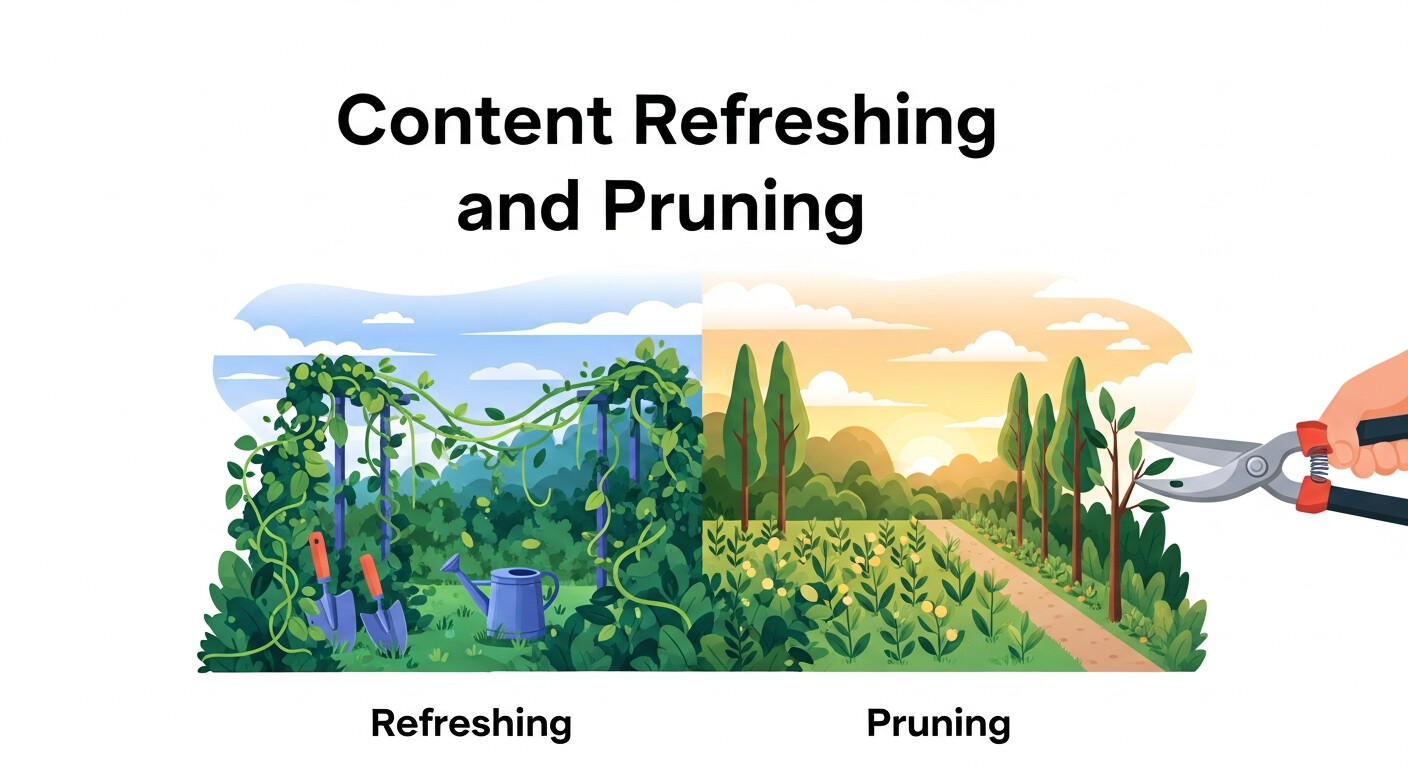
In the rush to publish new material, many businesses neglect their most valuable asset: their existing content library. Over time, content undergoes “decay.” Information becomes outdated, links break, and newer, fresher content pushes it down the rankings.
An advanced strategy involves shifting resources from creation to maintenance.
The Refresh Strategy
Identify posts that used to perform well but have seen a dip in traffic over the last 6 to 12 months. These are prime candidates for a refresh.
- Update the Data: Replace old statistics with current numbers.
- Add Depth: Expand thin sections with new insights or examples.
- Improve Visuals: Replace stock photos with custom graphics or screenshots.
- Check Competitors: See what the current top-ranking pages are doing that you aren’t.
By updating the “Last Updated” date and pushing the post back to the top of your feed, you can often achieve significant traffic gains with a fraction of the effort required to create something new.
Content Pruning
Sometimes, the best move is to delete content. This is known as content pruning.
If your site is bloated with years of low-quality, thin, or duplicate content, it can drag down your overall site authority. It spreads your “crawl budget” (the resources Google dedicates to scanning your site) too thin.
Audit your site for pages that get zero traffic and have no backlinks.
- Can it be improved? If yes, refresh it.
- Is it redundant? If it competes with another page on your site (keyword cannibalization), 301 redirect it to the stronger page.
- Is it useless? If it serves no purpose, delete it and let it return a 404 or 410 status.
Pruning ensures that search engines focus on your best, most relevant content.
Enhancing User Experience (UX) Signals
Google’s Core Web Vitals update made it clear: user experience is a ranking factor. You can write the most profound article in the world, but if the page loads slowly or the text is hard to read, you will lose visitors.
Readability and Structure
Online reading is different from reading a book. Users scan. They hunt for information. Massive walls of text are a deterrent.
- Short Paragraphs: Keep paragraphs to 2-3 sentences.
- Subheadings: Use descriptive H2s and H3s to guide the reader.
- Bullet Points: Break down lists and complex data.
- Bold Text: Highlight key takeaways to facilitate scanning.
Visual Content Optimization
Images and videos are essential for engagement, but they are also the primary culprits for slow loading speeds. Advanced optimization involves compressing all images before uploading. Use next-gen formats like WebP where possible.
Furthermore, ensure every image has descriptive Alt Text. This not only helps visually impaired users (accessibility is a massive part of UX) but also gives search engines more context about your content, helping you rank in Google Images.
Advanced Technical SEO for Content
Great writing needs a strong technical foundation. Technical SEO ensures that search engine bots can crawl, index, and understand your content without barriers.
Structured Data (Schema Markup)
Structured data is code that you add to your website to help search engines understand the content of your pages. It essentially labels your content. Instead of just seeing text, Google sees “This is a recipe,” “This is a review,” or “This is an event.”
Implementing Schema markup can make your pages eligible for Rich Snippets—those enhanced search results that show star ratings, cooking times, or FAQ drop-downs directly on the search results page.
Rich snippets attract the eye and significantly increase Click-Through Rate (CTR). Even if you don’t move up in position, taking up more visual real estate on the search page is a win.
Internal Linking Strategy
We mentioned linking in the context of topic clusters, but your internal linking strategy should go deeper. Internal links act as pipelines for “link juice” (authority).
If you have a high-authority page (like your homepage or a viral blog post), you can pass some of that authority to newer or lower-ranking pages by linking to them.
Be strategic with your Anchor Text (the clickable text in a hyperlink). Avoid generic phrases like “click here.” Instead, use descriptive, keyword-rich phrases that tell the user and the search engine what the target page is about. For example, “learn more about advanced content optimization” is far better than “read more.”
Data-Driven Decisions with SanMo US
Implementing these advanced content optimization tactics requires more than just intuition; it requires data. You need to track how users interact with your pages, which keywords are driving valuable traffic, and where your technical bottlenecks lie.
At SanMo US, we believe that digital marketing should be precise. Whether you are targeting a local audience or expanding across the nation, understanding the specific data points relevant to your market is crucial. By leveraging analytics to monitor dwell time, scroll depth, and conversion paths, you can continuously refine your content strategy. The goal is to move from guessing what works to knowing exactly how to serve your audience.
Frequently Asked Questions (FAQ)
What is the difference between basic SEO and advanced content optimization?
Basic SEO focuses on fundamentals like keyword placement, meta tags, and site speed. Advanced content optimization goes deeper, focusing on user intent, semantic search, topic authority, and technical enhancements like schema markup to maximize the performance of every piece of content.
How often should I audit and refresh my content?
It is best practice to conduct a light audit quarterly and a comprehensive content audit once a year. However, high-priority pages that drive significant revenue should be monitored monthly to ensure they remain accurate and competitive.
Does content length affect ranking?
There is no magic word count. While long-form content (1,500+ words) often tends to rank better because it covers topics thoroughly, the primary goal should be to satisfy user intent. If a user wants a quick answer, a 300-word post is better than a 3,000-word essay.
Can AI tools help with advanced optimization?
Yes, AI tools can be incredibly useful for generating outlines, suggesting related LSI keywords, and analyzing competitor content gaps. However, human oversight is essential to ensure tone, accuracy, and strategic alignment.
Why is internal linking so important for optimization?
Internal linking helps search engines discover new pages and understand the hierarchy and relationship between pages on your site. It also distributes page authority and keeps users on your site longer by providing relevant next steps.
Future-Proofing Your Digital Presence
The landscape of digital marketing changes rapidly. Algorithms update, user behaviors shift, and new technologies emerge. However, the core principle of advanced content optimization remains constant: create the best possible resource for your user.
By adopting these advanced tactics—embracing semantic search, prioritizing user intent, maintaining your content library, and tightening your technical SEO—you do more than just chase rankings. You build a resilient, high-quality website that commands authority and earns trust.
It is a process of continuous improvement. Start by auditing your current top-performing pages against the tactics in this guide. Identify the gaps, apply the fixes, and watch as your content begins to work harder for your business.