The era of server rooms and rigid, on-premise infrastructure is rapidly fading. For decades, businesses were tethered to physical hardware, limiting their ability to pivot when market demands shifted. If you wanted to test a new application, you bought a server. If you needed to scale up for a holiday rush, you bought more hardware that would likely sit idle for the rest of the year.
This model is unsustainable. Agility is the new currency of business, and the cloud is the bank.
Cloud computing has fundamentally altered how applications are built, deployed, and managed. It is no longer just a storage locker for data; it is an active, dynamic environment that powers the world’s most successful companies. For organizations looking to remain competitive, partnering with experts in cloud-based software development services is the most effective way to unlock this potential.
At SanMo US, we have witnessed this transition firsthand. We see companies moving away from monolithic architectures toward flexible, cloud-native solutions that allow them to innovate at speed. This guide explores why cloud-based development is essential for modern business, the technologies driving this change, and how SanMo US helps organizations navigate the complexities of digital transformation.
The Shift from On-Premise to Cloud-Native
To understand the value of cloud-based development, we must first look at what it replaces. Traditional software development often involved “waterfall” methodologies and monolithic applications. These were large, single-tiered software applications in which the user interface and data access code were combined into a single program from a single platform.
Updating these applications was a nightmare. A small change in one part of the code could break the entire system. Deployment cycles took months.
Cloud-native development flips this script. It utilizes the cloud’s elasticity and distributed nature to build applications that are resilient, manageable, and observable. This approach supports modern development practices like DevOps and Continuous Integration/Continuous Deployment (CI/CD), allowing businesses to release updates daily—or even hourly—rather than quarterly.
Core Benefits of Cloud-Based Development
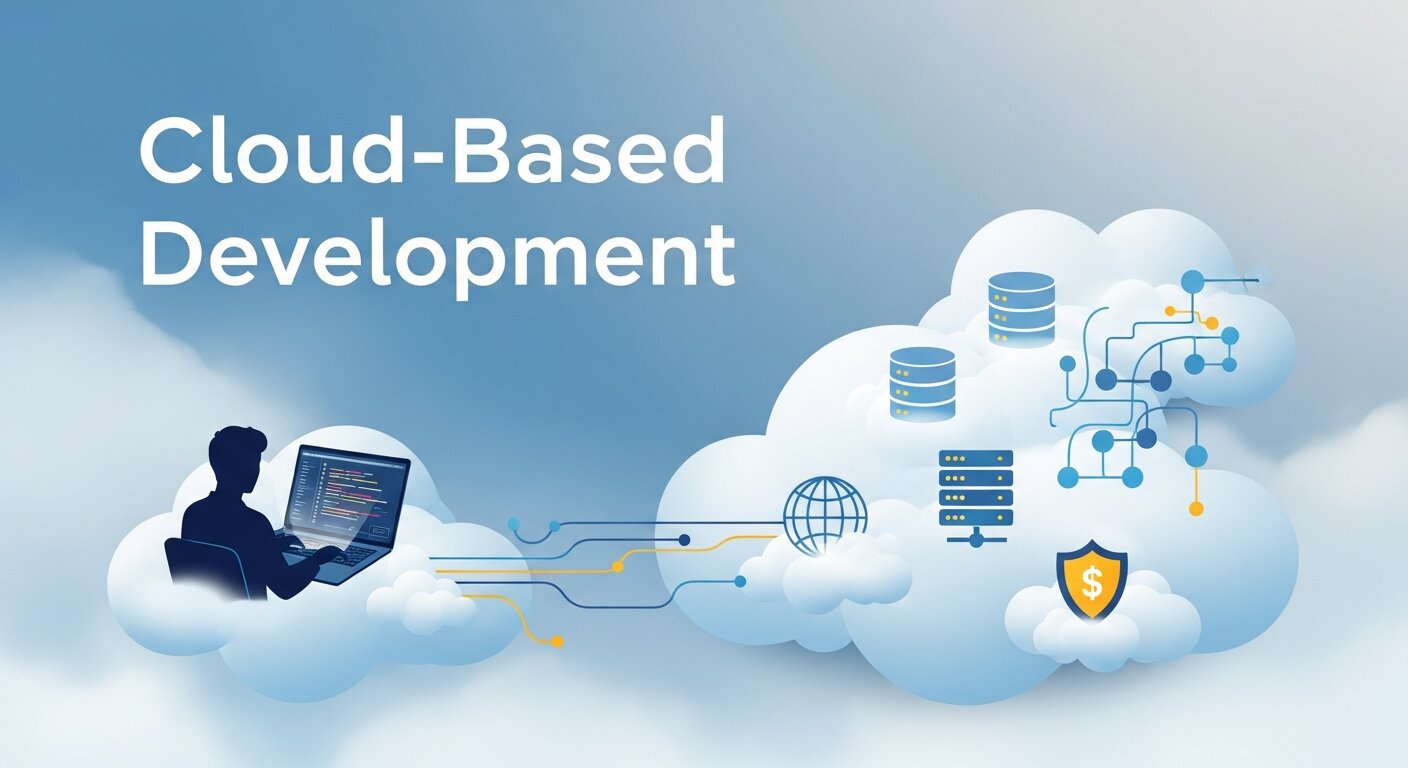
Migrating to the cloud isn’t just a technical upgrade; it is a strategic business move. When you engage professional software development services to build in the cloud, you unlock specific advantages that on-premise solutions simply cannot match.
1. Unmatched Scalability and Elasticity
In a physical data center, capacity planning is a guessing game. Buy too much, and you waste money. Buy too little, and your application crashes during peak traffic.
Cloud development offers elasticity. Resources can scale up or down automatically based on demand. If a marketing campaign goes viral, your application handles the load. When traffic subsides, your infrastructure footprint shrinks, ensuring you only pay for what you use. This fluidity is essential for startups experiencing rapid growth and enterprises managing seasonal fluctuations.
2. Cost Efficiency (CapEx vs. OpEx)
Traditional IT relies on Capital Expenditure (CapEx)—large, upfront investments in hardware and cooling systems. Cloud computing shifts this to Operational Expenditure (OpEx). You pay a monthly subscription for the resources you consume.
This shift frees up capital that can be reinvested into innovation, R&D, or marketing. Furthermore, because cloud providers (like AWS, Azure, and Google Cloud) operate at a massive scale, they can offer computing power at a lower cost than most individual companies could achieve on their own.
3. Accelerated Time-to-Market
Speed matters. The faster you can get a product from idea to user, the better your chances of capturing market share. Cloud platforms provide developers with a suite of ready-to-use tools and services—from databases to machine learning APIs—that reduce coding time.
SanMo US leverages these pre-built environments to prototype, test, and launch applications rapidly. We focus on writing the business logic that makes your product unique, rather than wasting time managing the underlying infrastructure.
4. Enhanced Collaboration
Remote work is here to stay. Cloud-based development environments allow teams distributed across the globe to collaborate in real-time. Code repositories, testing environments, and project management tools are accessible from anywhere with an internet connection. This democratization of access ensures that the best talent can work on your project, regardless of their physical location.
Key Technologies Powering Cloud Development
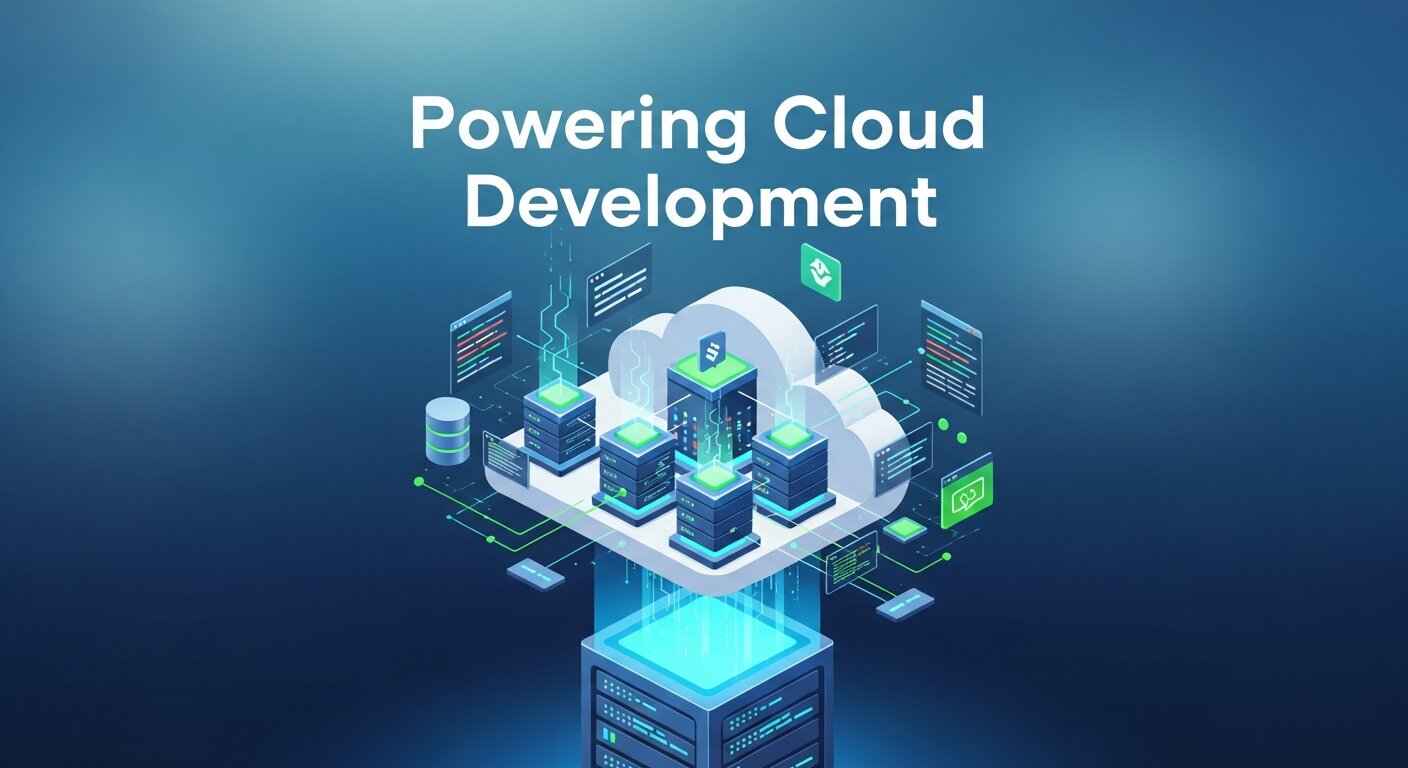
Understanding the “how” is just as important as the “why.” Modern software development services rely on a specific stack of technologies to maximize cloud capabilities.
Microservices Architecture
Unlike the monoliths of the past, microservices break an application down into a collection of smaller, independent services. Each service performs a single function (like processing payments or managing user profiles) and communicates via APIs.
This modularity makes applications easier to develop and maintain. If the payment processor needs an update, SanMo US developers can deploy it without taking down the entire application. It creates a system that is robust and fault-tolerant.
Containers and Kubernetes
Containers, such as Docker, package a piece of software with everything it needs to run: code, runtime, system tools, and libraries. This ensures the software runs the same way on a developer’s laptop as it does in the production environment.
Kubernetes takes this a step further by orchestrating these containers. It manages the deployment and scaling of containerized applications, automating operational tasks that used to require manual intervention.
Serverless Computing
Serverless computing allows developers to build and run applications without thinking about servers. The cloud provider handles all the infrastructure management. You simply write code, and it runs in response to events. This creates a true “pay-as-you-go” model, where you are not charged when your code isn’t running.
Multi-Cloud and Hybrid Cloud Strategy
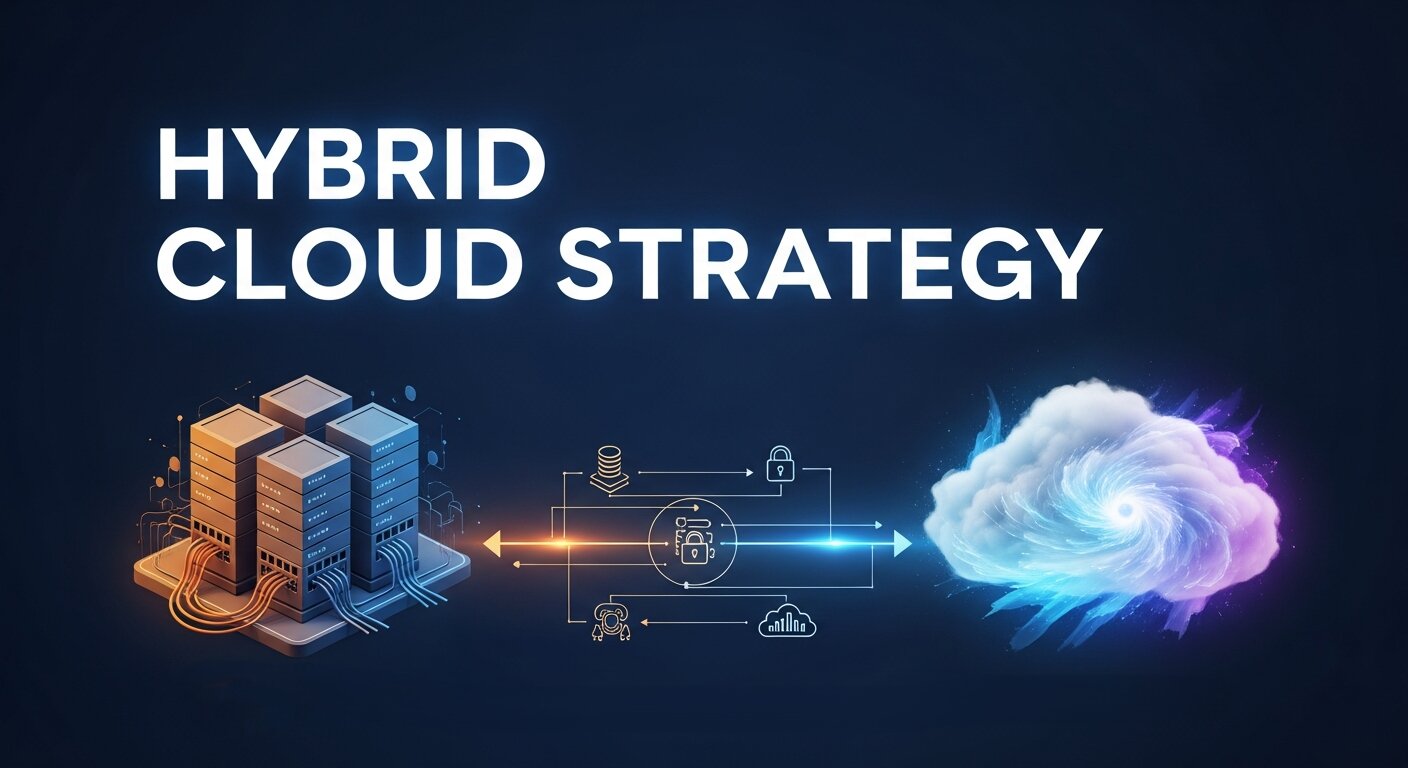
Relying on a single cloud provider can limit flexibility and increase long-term risk. Modern organizations are increasingly adopting multi-cloud and hybrid cloud strategies to balance performance, cost, and compliance. A multi-cloud approach leverages services from providers like Amazon Web Services, Microsoft Azure, and Google Cloud Platform to avoid vendor lock-in and optimize workloads. Meanwhile, hybrid cloud blends private infrastructure with public cloud scalability, giving businesses greater control over sensitive data while maintaining elasticity.
At SanMo US, we design architectures that distribute workloads intelligently across environments. This ensures operational resilience, regulatory compliance, and performance optimization. The result is a flexible infrastructure strategy that adapts as your business evolves, rather than restricting future growth.
Cloud Monitoring, Optimization, and Continuous Improvement
Cloud adoption is not a one-time event—it requires ongoing monitoring and optimization to maximize value. Without proper oversight, costs can spiral and performance bottlenecks can go unnoticed. Modern cloud environments use advanced monitoring tools to track system health, application performance, and resource utilization in real time.
SanMo US implements proactive observability practices, combining automated alerts, performance analytics, and cost-management strategies. We continuously refine infrastructure configurations to eliminate waste and improve efficiency. Through performance tuning, auto-scaling adjustments, and security audits, we ensure your cloud ecosystem remains agile and cost-effective. Continuous improvement is embedded into our lifecycle, helping your organization stay ahead of evolving demands while maintaining peak operational performance.
The SanMo US Approach: Tailored Innovation
While the tools are available to everyone, the strategy is what sets successful projects apart. At SanMo US, we understand that every business has a unique digital DNA. We don’t believe in cookie-cutter solutions.
Our approach to software development services begins with a deep analysis of your business goals. Are you trying to modernize a legacy system? Are you building a disruptive mobile app from scratch? Do you need to integrate AI into your workflow?
Strategic Consultation
We help you choose the right cloud model—Public, Private, or Hybrid. For highly regulated industries like finance or healthcare, a hybrid model might offer the security of a private cloud with the scalability of a public one. We map out a migration strategy that minimizes downtime and ensures data integrity.
DevOps Integration
We integrate DevOps practices into every project. By bridging the gap between development (Dev) and operations (Ops), we shorten the systems development life cycle. Automation is at the heart of our process. Automated testing and deployment pipelines mean that bugs are caught early, and software is delivered consistently.
Security First
Security in the cloud operates on a shared responsibility model. While the provider secures the infrastructure, the client must secure the data and applications. SanMo US builds security into the code from day one—a practice known as DevSecOps. We implement robust identity management, encryption, and compliance protocols to ensure your data remains protected against evolving cyber threats.
Challenges and How to Overcome Them
Transitioning to cloud-based development is not without hurdles. Acknowledging these challenges is the first step to conquering them.
Legacy System Integration: Many established companies have decades of data locked in older systems. “Lifting and shifting” these to the cloud rarely works well. It often requires refactoring or re-architecting the application to function in a cloud environment.
Talent Gap: Cloud technologies evolve rapidly. Finding in-house developers who are experts in Kubernetes, AWS Lambda, and microservices is difficult and expensive. This is where partnering with a dedicated provider like SanMo US becomes invaluable. We invest heavily in continuous training, ensuring our teams are always at the cutting edge.
Vendor Lock-In: Relying too heavily on a single cloud provider’s proprietary tools can make it difficult to switch later. We advocate for multi-cloud strategies and containerization to maintain portability and give you leverage.
The Future of Cloud Development
The horizon of cloud computing is expanding. We are currently seeing the convergence of cloud with Artificial Intelligence and Machine Learning (AI/ML). Cloud platforms now offer powerful AI tools that allow developers to integrate chatbots, image recognition, and predictive analytics into applications with ease.
Edge computing is another frontier. By processing data closer to where it is created (the “edge” of the network), businesses can reduce latency for critical applications like autonomous vehicles or industrial IoT.
SanMo US is actively exploring these technologies, ensuring that the software development services we provide today are ready for the demands of tomorrow.
Frequently Asked Questions
What is the difference between cloud-native and cloud-enabled?
“Cloud-enabled” usually refers to a legacy application that was originally built for an on-premise server but has been moved to the cloud (often called “lift and shift”). It runs on the cloud but doesn’t take full advantage of cloud features. “Cloud-native” applications are built specifically for the cloud environment, using microservices and containers to maximize scalability and resilience.
How does cloud development improve security?
Major cloud providers invest billions in physical and network security, far more than most individual companies can afford. Additionally, cloud development allows for automated security patching, identity and access management (IAM), and encryption at rest and in transit. However, proper configuration is essential, which is why expert guidance is recommended.
Is cloud software development more expensive?
Initially, there may be costs associated with migration and development. However, over time, the Total Cost of Ownership (TCO) is generally lower. You eliminate the cost of hardware maintenance, electricity, and cooling. Plus, the ability to scale down resources when they aren’t needed prevents money from being wasted on idle capacity.
Can SanMo US help us migrate our existing apps?
Yes. We specialize in modernization strategies. We assess your current portfolio to determine the best path forward—whether that be rehosting, replatforming, or completely refactoring your applications to thrive in a cloud environment.
How long does a typical cloud development project take?
Timelines vary significantly based on complexity. A simple web application might take a few months, while a complex enterprise migration could take longer. At SanMo US, we work in agile sprints, delivering functional iterations of the software regularly so you see progress and value immediately.
Partnering for Digital Success
The transition to cloud-based software is not merely a technical upgrade—it is a fundamental shift in how value is delivered to customers. It empowers businesses to react faster, scale efficiently, and innovate without the shackles of hardware limitations.
However, the landscape is complex. Navigating the choices between providers, architectures, and tools requires experience.
SanMo US stands ready to be that guide. Our software development services are designed to meet you where you are and take you where you need to be. Whether you are a startup looking to disrupt the market or an enterprise seeking to optimize operations, the cloud is your engine, and we are your engineers.
Don’t let legacy infrastructure hold you back. The future of business is in the cloud, and it’s time to claim your space.