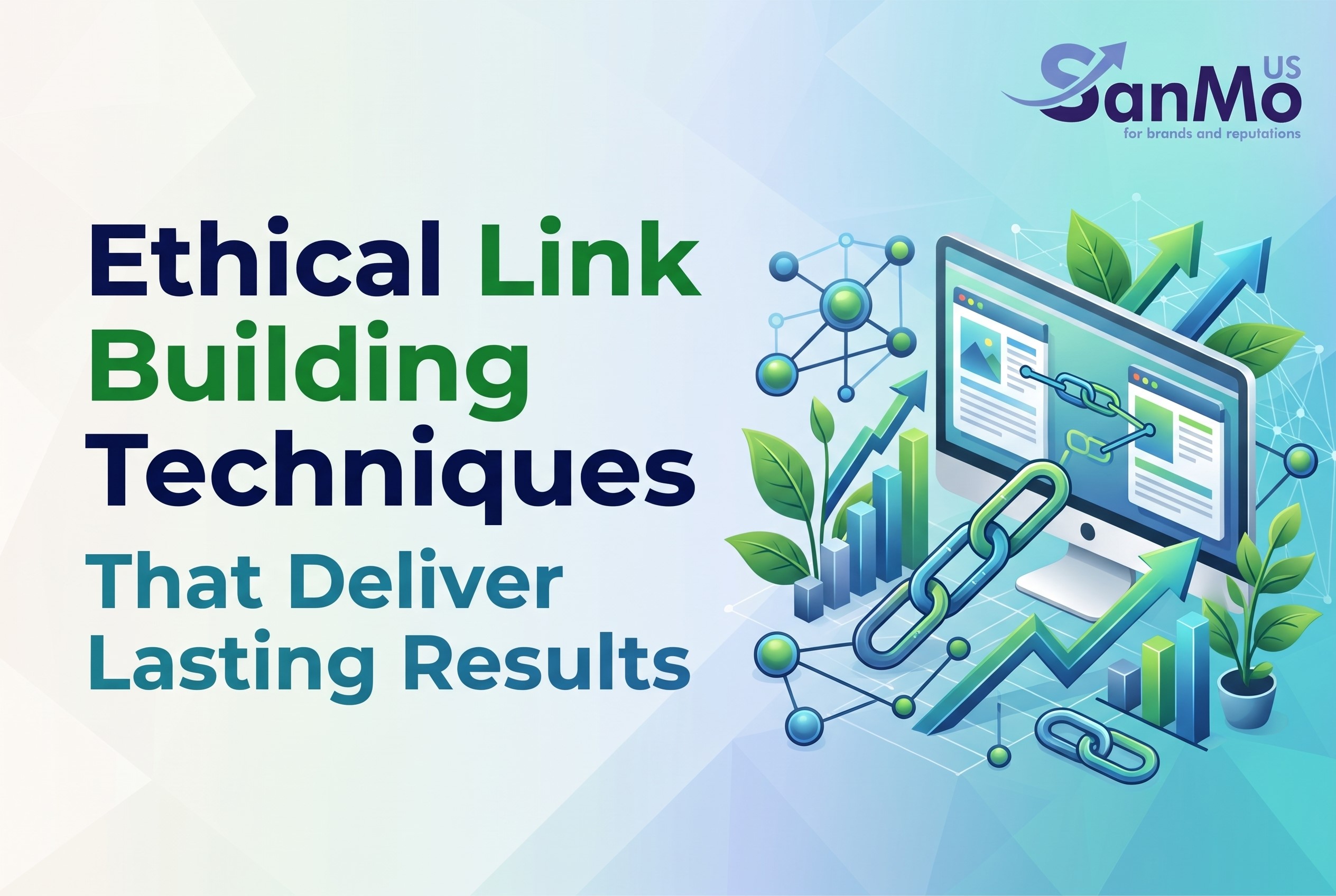
Ethical Link Building is one of the most important strategies for building long-term search engine visibility and improving website authority. In an increasingly competitive digital environment, businesses need more than a large number of backlinks to achieve sustainable SEO success. They need relevant, trustworthy, and naturally earned links that demonstrate credibility to search engines and provide genuine value to website visitors.
A strong backlink profile helps search engines understand a website’s relevance, authority, and trustworthiness. However, using manipulative link-building practices can expose websites to ranking losses and search engine penalties. This makes ethical approaches essential for businesses that want consistent organic growth.
SanMo US helps businesses develop sustainable SEO strategies through responsible link-building practices. By focusing on White Hat Link Building, relevant website placements, quality content, and Natural Link Acquisition, businesses can strengthen their online presence without relying on risky shortcuts. Understanding the right techniques allows organizations to build meaningful connections, improve search performance, and achieve lasting digital growth.
Focus on High-Quality and Relevant Backlinks
High-quality backlinks are the foundation of a successful ethical link-building strategy. Search engines consider the relevance and credibility of linking websites when evaluating backlink signals. A link from a trustworthy website within a related industry can provide more meaningful value than numerous links from unrelated or low-quality sources.
Choose Websites Relevant to Your Industry
Industry relevance should be a primary consideration when selecting websites for backlinks. For example, a technology company can benefit from links published on technology blogs, software publications, and business technology platforms.
Relevant placements help establish contextual connections between websites. They also introduce businesses to audiences who are more likely to be interested in their products or services. This approach supports High-Quality Backlinks and creates stronger opportunities for referral traffic.
Evaluate Website Quality Before Building Links
Before pursuing a backlink opportunity, businesses should evaluate the website’s content quality, editorial standards, audience relevance, and overall credibility. Websites that publish original, informative, and regularly updated content are generally more suitable partners.
SanMo US emphasizes quality-focused link-building practices that prioritize relevance and genuine value. This helps businesses develop a healthier Backlink Profile instead of concentrating only on backlink quantity.
Create Valuable Content That Naturally Attracts Links
 Content creation is one of the most sustainable ways to earn backlinks. When businesses publish useful information, other website owners, bloggers, and industry professionals have a reason to reference their resources. Valuable content supports organic link acquisition while strengthening brand credibility.
Develop Informative and Research-Based Content
Original research, comprehensive guides, industry insights, and educational articles can attract attention from relevant publishers. Content that answers specific questions or explains complicated subjects often becomes a useful reference for other websites.
Businesses should focus on creating resources that provide practical information instead of publishing content solely to insert backlinks. This approach encourages Content Marketing for Link Building and supports long-term organic visibility.
Update Existing Content Regularly
Outdated information can reduce the usefulness of otherwise valuable content. Regularly reviewing statistics, updating references, correcting inaccurate details, and improving explanations helps maintain content quality.
Updated resources remain more relevant to readers and can create additional opportunities for natural backlinks. A consistent publishing and updating strategy also supports broader Organic Search Rankings by improving the overall usefulness of a website.
Build Relationships Through Guest Posting
Guest posting is an effective ethical link-building technique when it involves contributing original, relevant, and informative content to reputable websites. It allows businesses to share industry knowledge, reach new audiences, and establish relationships with publishers.
Select Reputable Guest Posting Opportunities
Businesses should identify publications that serve relevant audiences and maintain clear editorial standards. A suitable guest posting website should publish original articles, review contributions, and provide information that benefits its readers.
Avoid websites that exist primarily to sell backlinks or publish large volumes of unrelated promotional content. Selecting relevant publications helps maintain responsible Guest Posting Strategies and supports long-term SEO objectives.
Publish Content That Provides Genuine Value
Guest articles should offer useful insights rather than function as advertisements. Contributors can explain industry developments, share practical recommendations, and address common challenges experienced by readers.
When links are included, they should provide additional information that naturally supports the article. This creates a better experience for readers while strengthening brand recognition and referral opportunities.
Use Digital PR to Earn Authoritative Links
Digital public relations creates opportunities to earn backlinks through news coverage, expert commentary, industry publications, and meaningful brand stories. Instead of directly requesting links from every website, businesses can develop newsworthy information that encourages publishers to reference their resources.
Share Newsworthy Business Information
Companies can attract editorial attention by publishing original research, announcing important developments, sharing industry perspectives, or providing expert insights. These resources give journalists and publishers useful information for their stories.
A well-planned digital PR campaign can improve brand awareness while generating relevant editorial references. It also strengthens Online Brand Authority and creates opportunities to connect with influential industry publications.
Develop Relationships With Industry Journalists
Building professional relationships with journalists, editors, and content publishers can improve opportunities for future media coverage. Businesses should provide accurate information, respond professionally, and share expertise when it is relevant to a journalist’s topic.
These relationships should focus on providing useful information rather than demanding backlinks. Ethical communication helps businesses develop credibility and supports sustainable Authority Link Building.
Strengthen Internal Linking Alongside External Links
 Internal linking is another important part of an effective SEO strategy. While external backlinks connect different websites, internal links help search engines and visitors discover relevant pages within the same website.
Connect Related Website Pages
Businesses should connect related blog posts, service pages, category pages, and informative resources through meaningful internal links. For example, a blog discussing SEO strategies can link to a relevant page explaining professional link-building services.
This structure helps visitors explore additional information and improves website navigation. It also distributes internal link equity across important pages, making internal linking a valuable part of broader SEO Link Building Strategies.
Use Descriptive and Natural Anchor Text
Anchor text should clearly communicate the topic of the destination page. Generic phrases may provide less context than descriptive wording that accurately reflects the linked content.
However, businesses should avoid forcing exact-match keywords into every internal link. Natural anchor text improves readability and supports a balanced website structure without creating an unnecessarily repetitive linking pattern.
Apply Broken Link Building Responsibly
Broken link building involves identifying outdated or unavailable links on relevant websites and suggesting useful replacement resources. It can benefit both website owners and businesses when the replacement content genuinely matches the original topic.
Identify Relevant Broken Links
Businesses can use backlink analysis tools and website auditing platforms to discover broken external links on relevant industry websites. The most valuable opportunities are pages where the missing resource previously provided information related to an existing business resource.
Finding relevant broken links requires careful research. Not every broken URL represents a suitable opportunity, so businesses should prioritize topical relevance and content quality.
Offer Useful Replacement Resources
After identifying a broken link, businesses can contact the website owner or editor with a polite explanation. They can suggest an existing resource or create a suitable replacement if the topic is important.
The suggested content should provide comparable or greater value than the unavailable resource. This makes Broken Link Building a practical relationship-building technique rather than an aggressive backlink acquisition tactic.
Monitor Backlink Quality and Maintain a Healthy Profile
 Building backlinks is only one part of a successful SEO campaign. Businesses must also monitor their backlink profiles to understand link quality, identify unusual patterns, and evaluate whether their strategies are producing meaningful results.
Conduct Regular Backlink Audits
A backlink audit helps businesses review referring domains, linking page relevance, anchor text distribution, and potentially suspicious linking patterns. Regular analysis can reveal unexpected changes and highlight opportunities to improve existing campaigns.
SEO platforms such as Google Search Console and other backlink analysis tools can support this process. Consistent monitoring helps businesses maintain a healthier Backlink Profile and make informed decisions about future link-building activities.
Evaluate Performance Beyond Link Quantity
The success of an ethical link-building campaign should not depend exclusively on the total number of acquired links. Businesses should also evaluate referring domain quality, organic traffic, keyword visibility, referral visits, and conversions.
These performance indicators provide a more complete understanding of campaign effectiveness. By focusing on meaningful outcomes, companies can improve their Sustainable SEO Growth and invest in activities that support long-term business objectives.
Avoid Manipulative Link-Building Practices
 Ethical link building requires businesses to avoid strategies designed primarily to manipulate search engine rankings. Practices such as purchasing ranking-oriented links, participating in link schemes, using automated link-building software, and creating private blog networks can introduce unnecessary SEO risks.
Follow Search Engine Guidelines
Google’s spam policies identify practices such as link spam, excessive link exchanges, and automated link creation as potentially manipulative. Businesses should understand these guidelines before launching any backlink campaign.
Responsible White Hat SEO Techniques focus on earning links through useful content, genuine editorial references, and relevant professional relationships. Following search engine guidelines helps reduce avoidable risks and creates a more reliable foundation for organic visibility.
Prioritize Long-Term SEO Sustainability
Quick backlink acquisition may appear attractive, but a large number of low-quality links does not guarantee better rankings. Businesses should prioritize consistent content development, relevant outreach, and genuine industry relationships.
A sustainable approach requires patience, ongoing evaluation, and realistic expectations. Ethical link-building campaigns are designed to strengthen website credibility over time rather than produce temporary ranking improvements through questionable shortcuts.
Work With Professional Ethical Link-Building Services
Developing and maintaining an effective backlink strategy requires research, content planning, outreach, quality evaluation, and continuous monitoring. Professional SEO support can help businesses organize these activities and maintain consistent standards throughout their campaigns.
Develop a Customized Link-Building Strategy
Every business has different SEO requirements, industry competitors, target audiences, and website authority levels. A customized strategy considers these differences before selecting suitable backlink opportunities.
SanMo US helps businesses approach link building with an emphasis on relevance, quality, and responsible SEO practices. A structured campaign can identify suitable publications, develop valuable content, and establish meaningful relationships with relevant websites.
Measure Results and Improve Campaigns
Professional link-building campaigns should include regular performance reviews and strategic improvements. Businesses can use backlink reports, traffic analytics, and search visibility data to identify successful activities and areas requiring attention.
SanMo US focuses on helping businesses strengthen their online presence through effective SEO practices. Companies looking for a responsible approach to Ethical Link Building can explore the available SEO link-building services and develop a strategy aligned with their long-term growth goals.
Conclusion
Ethical Link Building is essential for businesses that want to build website authority, improve search visibility, and establish sustainable online growth. By prioritizing relevant backlinks, creating valuable content, developing genuine publisher relationships, using digital PR, and monitoring backlink quality, companies can build stronger SEO foundations.
Avoiding manipulative practices and following search engine guidelines also helps protect long-term website performance. Rather than focusing on backlink quantity, businesses should concentrate on relevance, credibility, and genuine value. With a structured approach and consistent optimization, SanMo US can help businesses pursue responsible link-building strategies that support lasting SEO performance and stronger digital credibility.
Frequently Asked Questions (FAQs)
1. What Is Ethical Link Building?
Ethical Link Building is the process of acquiring backlinks through legitimate and value-driven SEO practices. It focuses on relevant websites, quality content, genuine relationships, and editorial references rather than manipulative techniques designed to influence search rankings.
2. Why Is Ethical Link Building Important for SEO?
Ethical link building helps establish website credibility and supports search engine understanding of a website’s relevance and authority. Quality backlinks can also generate referral traffic, improve brand visibility, and contribute to sustainable organic search performance.
3. What Are the Best Ethical Link-Building Techniques?
Some effective techniques include guest posting on relevant publications, creating link-worthy content, digital PR, broken link building, and developing professional relationships with industry publishers. Regular backlink monitoring also helps maintain quality.
4. How Does White Hat Link Building Differ From Black Hat SEO?
White Hat Link Building follows search engine guidelines and focuses on earning relevant backlinks through valuable content and genuine relationships. Black Hat SEO uses manipulative techniques, such as link schemes and automated link creation, to influence rankings.
5. How Long Does Ethical Link Building Take to Show Results?
The timeline varies depending on website authority, competition, content quality, and the consistency of link-building activities. It may take several weeks or months to observe meaningful improvements, and results are not guaranteed.
6. Are Guest Posts Considered Ethical Link Building?
Guest posting can be ethical when articles provide genuine value to relevant audiences and follow the publisher’s editorial standards. However, publishing content primarily to manipulate rankings through paid or excessive keyword-rich links can violate search engine spam policies.
7. How Can Businesses Identify High-Quality Backlink Opportunities?
Businesses should evaluate website relevance, content quality, editorial standards, audience engagement, and overall credibility. They should also avoid websites that publish unrelated content or primarily exist to sell backlinks.
8. What Is a Backlink Audit?
A backlink audit is the process of reviewing links pointing to a website to evaluate their relevance, quality, and potential risks. It helps businesses identify unusual linking patterns and make informed decisions about backlink management.
9. Can Ethical Link Building Improve Domain Authority?
Ethical link building can strengthen a website’s backlink profile and contribute to improved search performance. However, Domain Authority is a third-party metric, not a direct Google ranking factor, and improvements are not guaranteed.
10. How Can SanMo US Help With Ethical Link Building?
SanMo US supports businesses through professional SEO and link-building strategies focused on relevant backlink opportunities and responsible optimization practices. Businesses can explore its link-building services to strengthen their online presence and support long-term SEO goals.