
In today’s competitive digital landscape, businesses need efficient technology to manage operations, improve customer experiences, and achieve sustainable growth. Modern Software Development Services help organizations streamline workflows, automate repetitive tasks, and create digital solutions that support their business objectives. From custom applications to enterprise platforms, the right software can significantly improve productivity while reducing operational challenges.
As businesses continue adopting digital technologies, investing in reliable software solutions has become an important part of long-term success. Modern software development enables companies to replace outdated systems, improve collaboration, and make better decisions through data-driven processes. With the support of an experienced technology partner like SanMo US, organizations can develop scalable software solutions that align with their operational needs and future goals.
Understanding Modern Software Development Services
Modern software development services involve designing, building, testing, deploying, and maintaining applications that solve specific business problems. These services help organizations use technology more effectively while improving the speed and accuracy of everyday operations. Depending on business requirements, software solutions can be developed for internal management, customer engagement, automation, or complex enterprise processes.
What Makes Software Development Modern?
Modern software development focuses on flexibility, scalability, security, and continuous improvement. Instead of relying on outdated development methods, businesses can use agile processes, cloud technologies, and modern programming frameworks to build applications that adapt to changing requirements.
Agile Software Development allows development teams to work in smaller stages, collect feedback, and improve applications throughout the project. This approach helps businesses respond to changing market conditions while maintaining development quality.
Why Businesses Need Modern Software Solutions
Traditional business systems often involve manual processes, disconnected applications, and inefficient workflows. These challenges can reduce employee productivity and increase operating costs. Modern software solutions connect different business functions, simplify information management, and help teams complete tasks more efficiently. Organizations can also use customized applications to address specific operational challenges instead of depending entirely on generic software products.
How Software Development Services Improve Business Productivity
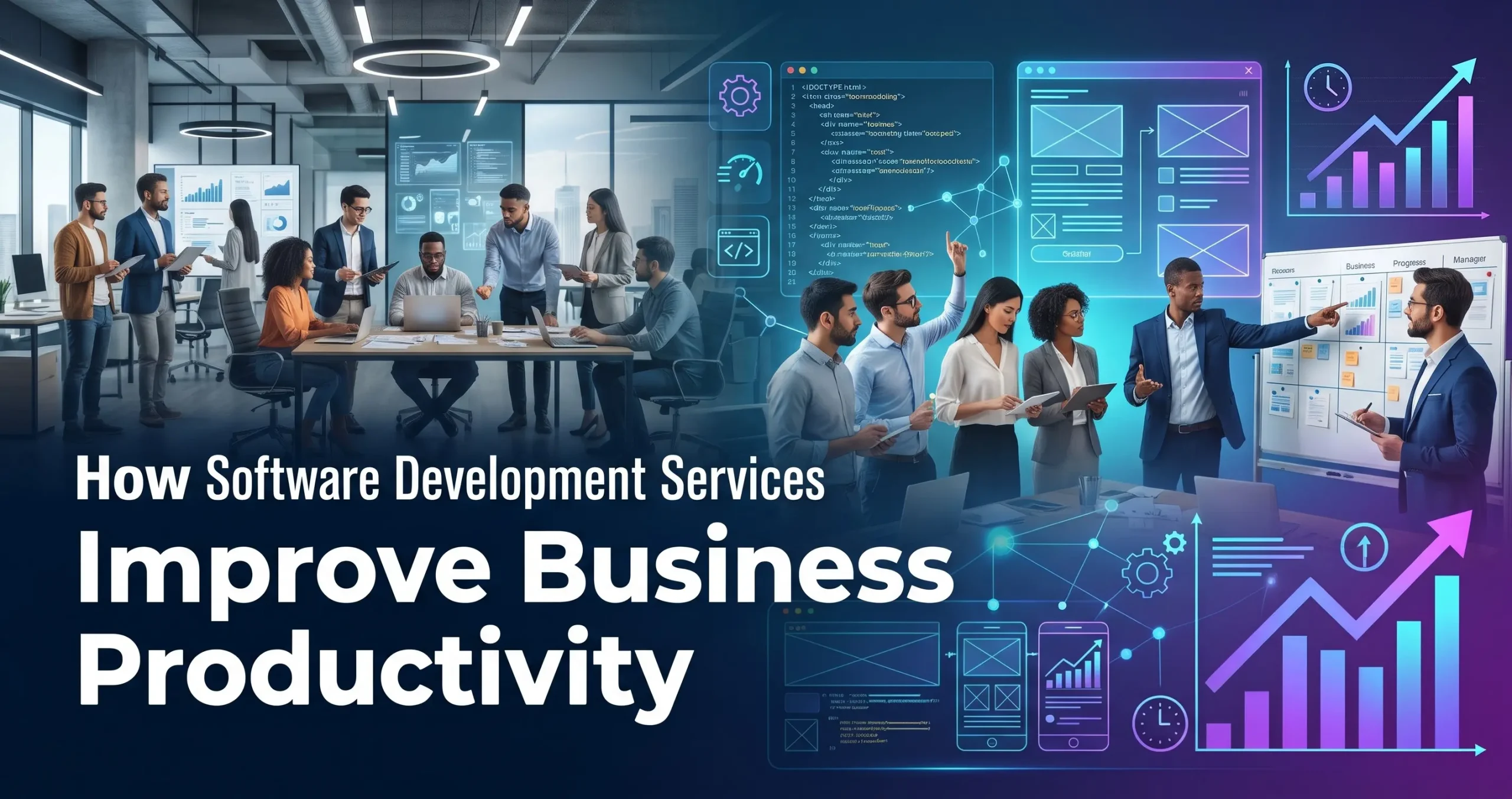 Productivity depends on how effectively a business manages its employees, resources, technology, and daily operations. Professional software development helps organizations eliminate unnecessary tasks and establish more organized workflows. By implementing technology that matches their requirements, companies can improve performance across multiple departments.
1. Automating Repetitive Business Tasks
Manual activities consume valuable employee time and increase the possibility of human error. Modern applications can automate routine activities such as data entry, invoice processing, report generation, appointment scheduling, and customer notifications.
Business Process Automation helps organizations complete repetitive operations with greater speed and consistency. Employees can spend less time handling administrative responsibilities and more time focusing on customer relationships, strategic planning, and business development.
Automation also creates standardized workflows that make daily operations easier to monitor and manage.
2. Improving Team Collaboration
Effective collaboration is essential for maintaining productivity, especially when employees work across different departments or locations. Modern software applications provide centralized communication, document sharing, project tracking, and task management capabilities.
Team Collaboration Software allows employees to access relevant information, communicate with colleagues, and coordinate responsibilities from a shared digital environment. This reduces communication gaps and helps teams complete projects with fewer delays.
Integrated collaboration platforms also make it easier for managers to monitor progress and identify operational challenges.
3. Streamlining Business Workflows
Disorganized workflows can create unnecessary delays between departments. For example, sales, finance, customer service, and inventory teams may use separate systems that do not communicate effectively.
Workflow Management Systems connect business activities through structured digital processes. Employees can track requests, approve documents, assign responsibilities, and monitor project progress from centralized applications.
This improves operational visibility and reduces the time required to move information between departments.
4. Enhancing Data Management and Accessibility
Businesses generate large amounts of information through sales activities, customer interactions, financial transactions, and internal operations. Managing this information manually can become difficult as organizations expand. Modern software provides centralized data storage and structured access, allowing employees to retrieve accurate information whenever required.
Database Management Systems help businesses organize, store, update, and retrieve important records efficiently. With improved data accessibility, employees can make informed decisions without wasting time searching through disconnected files or outdated records.
5. Reducing Operational Costs
Unnecessary manual work, inefficient processes, and outdated technology can increase business expenses. Modern software development helps organizations identify operational inefficiencies and implement solutions that reduce recurring costs.
Cost-Effective Software Solutions can minimize administrative workloads, reduce errors, and improve resource allocation. Businesses can also replace multiple disconnected applications with integrated platforms that support different operational requirements.
Over time, these improvements can increase productivity while helping organizations manage their technology budgets more effectively.
6. Improving Customer Service and Experience
Customer satisfaction directly influences business growth and long-term relationships. Companies that struggle with slow responses, inconsistent communication, or inefficient support processes may lose valuable customers.
Customer Relationship Management (CRM) Software helps businesses organize customer information, track interactions, manage sales opportunities, and coordinate support activities. These capabilities allow employees to respond more quickly and provide consistent customer experiences. Modern customer service applications can also integrate chatbots, automated notifications, and support ticket management to improve service availability.
The Role of Custom Software Development in Business Efficiency
 Custom software development allows businesses to build applications according to their specific workflows, industry requirements, and operational objectives. Unlike generic software, customized solutions can address unique business challenges and integrate with existing technology. This flexibility helps organizations improve productivity while maintaining greater control over their digital infrastructure.
Developing Solutions for Specific Business Needs
Every organization has different operational requirements. A retail company may need inventory management software, while a financial organization may require advanced reporting and transaction management capabilities.
Custom Software Development makes it possible to create applications that match these specific requirements. Businesses can select relevant features, define workflows, and establish integrations that support their existing operations. This approach reduces dependence on unnecessary features and helps employees work with tools designed around their responsibilities.
Integrating Existing Business Systems
Many organizations use separate applications for accounting, marketing, customer management, and project coordination. When these systems operate independently, employees may need to enter the same information multiple times.
Software Integration Services connect different applications and enable them to exchange information more effectively. Integrated systems reduce data duplication, improve communication between departments, and create more consistent business processes. For growing organizations, integration also makes it easier to manage expanding technology requirements.
Building Scalable Business Applications
Business requirements change as organizations gain customers, introduce new services, and expand into additional markets. Software that cannot accommodate increasing workloads may eventually become a productivity limitation.
Scalable Software Solutions are designed to support future business expansion. Developers can build flexible architectures that accommodate additional users, new features, increased data volumes, and changing operational demands. This allows businesses to expand their digital capabilities without constantly replacing their core applications.
Modern Technologies Transforming Software Development
 Technology continues to change how businesses develop and use software. Modern development practices make applications more accessible, secure, and adaptable. By adopting appropriate technologies, organizations can improve operational performance and prepare their systems for future requirements.
Cloud-Based Software Development
Cloud technology allows businesses to access applications, databases, and computing resources through internet-connected infrastructure. Employees can work with business applications from different locations without depending entirely on physical office systems.
Cloud-Based Software Solutions support remote collaboration, flexible resource management, and easier infrastructure expansion. They can also reduce the need for maintaining extensive on-premises hardware. Cloud platforms provide businesses with opportunities to improve accessibility while adapting their technology resources to changing workloads.
Artificial Intelligence and Intelligent Automation
Artificial intelligence is introducing new opportunities for improving business productivity. AI-powered applications can analyze information, identify patterns, assist with customer communication, and support repetitive decision-making processes.
AI-Powered Business Automation helps organizations reduce manual workloads and improve the speed of selected business operations. For example, intelligent systems can assist with document processing, customer support inquiries, data classification, and predictive analysis. When implemented responsibly, these capabilities can help employees focus on tasks that require human judgment and expertise.
Cybersecurity and Software Protection
Productivity improvements are valuable only when business applications and information remain protected. Security weaknesses can lead to unauthorized access, operational disruption, and financial losses.
Secure Software Development incorporates security considerations throughout the development lifecycle. This includes appropriate authentication, access controls, data encryption, vulnerability testing, and regular software updates. Businesses should prioritize security from the planning stage rather than treating it as an additional feature after development.
Choosing the Right Software Development Partner
Selecting a reliable development partner is an important decision because software quality directly affects business performance. Organizations should evaluate technical capabilities, communication practices, development processes, and long-term support before choosing a provider.
Evaluating Technical Expertise and Experience
A development partner should understand the technologies and application types relevant to the business. Experience with modern frameworks, databases, cloud infrastructure, and software integrations can help ensure that projects meet technical requirements.
Software Development Expertise also involves understanding business objectives and translating them into practical technology solutions. A capable provider should be able to explain technical decisions and recommend suitable approaches.
Prioritizing Communication and Project Management
Successful software projects require consistent communication between businesses and development teams. Clear requirements, realistic timelines, regular progress updates, and structured feedback help prevent misunderstandings.
Agile Project Management supports collaboration by dividing development into manageable stages. Businesses can review progress, provide feedback, and request necessary adjustments throughout the project.
Considering Maintenance and Technical Support
Software development does not end when an application is launched. Applications require maintenance, security updates, performance monitoring, and occasional feature improvements to remain effective.
Software Maintenance and Support help organizations keep their applications reliable as technology and business requirements change. Choosing a partner that understands ongoing support can protect the long-term value of a software investment.
How SanMo US Helps Businesses Improve Productivity
Businesses need technology solutions that support their goals without introducing unnecessary complexity. SanMo US provides IT and technology-related services to help organizations address their digital requirements and strengthen their online and operational capabilities.
Through the right software development strategy, businesses can improve workflow management, automate repetitive operations, and create applications that support their growth objectives. A well-planned development process also considers application performance, scalability, integration requirements, and security.
For organizations planning digital improvements, selecting the right development approach can create a stronger foundation for operational efficiency and long-term business productivity.
Future Trends in Software Development and Business Productivity
 Software development will continue evolving as businesses adopt more advanced digital technologies. Emerging innovations are expected to influence application design, automation, data management, and collaboration.
Low-Code and No-Code Development
Low-Code Development Platforms allow developers to build applications using visual tools and reusable components. These platforms can accelerate selected development activities and help businesses create internal applications more efficiently.
DevOps and Continuous Software Delivery
DevOps Practices bring development and operations teams closer together through automation, collaboration, and continuous improvement. This approach can streamline software testing, deployment, and maintenance while helping organizations deliver updates more consistently.
Intelligent Data Analytics
Business Intelligence and Data Analytics help organizations transform operational information into useful insights. By analyzing performance data, companies can identify inefficiencies, understand customer behavior, and make more informed strategic decisions.
As these technologies mature, businesses that adopt suitable software solutions will be better positioned to improve productivity and respond to changing market demands.
Conclusion
Modern software development services play an important role in improving business productivity. From workflow automation and system integration to cloud computing and AI-powered applications, the right technology can simplify operations and help employees work more efficiently.
Custom software solutions also allow businesses to address specific challenges, reduce operational costs, and prepare for future growth. However, achieving these benefits requires careful planning, secure development practices, and reliable technical support. By working with an experienced technology partner like SanMo US, businesses can explore software solutions that align with their objectives and support sustainable digital growth.
Frequently Asked Questions (FAQs)
1. What are software development services?
Software development services involve designing, developing, testing, deploying, and maintaining applications that help businesses solve operational challenges and improve productivity.
2. How do software development services improve business productivity?
They improve productivity by automating repetitive tasks, streamlining workflows, enhancing collaboration, and providing employees with efficient digital tools.
3. What is custom software development?
Custom software development involves creating applications specifically designed around a company’s unique requirements, workflows, and business objectives.
4. Why is software automation important for businesses?
Software automation reduces manual work, minimizes human errors, improves operational speed, and allows employees to focus on more valuable responsibilities.
5. What industries benefit from software development services?
Healthcare, finance, retail, education, manufacturing, logistics, and professional services can all benefit from customized software solutions.
6. How does cloud-based software improve productivity?
Cloud-based software provides remote accessibility, supports team collaboration, simplifies resource management, and allows businesses to access applications from different locations.
7. What is the difference between custom software and off-the-shelf software?
Custom software is developed for specific business requirements, whereas off-the-shelf software is designed for a broader audience with predefined features and functionality.
8. How does AI improve modern software development?
AI helps automate repetitive processes, analyze business information, improve customer interactions, and support faster decision-making through intelligent applications.
9. Why should businesses prioritize software security?
Software security protects sensitive information, reduces cybersecurity risks, prevents unauthorized access, and helps maintain reliable business operations.
10. How can businesses choose the right software development company?
Businesses should evaluate technical expertise, industry experience, communication, project management practices, security standards, and ongoing maintenance support.